I made a vase! Reinventing my composition in Photoshop


Three weeks ago, my dog died. I’d lost other pets before, but Buddy was my shadow – my “heart” animal – and I wasn’t there to comfort him at the end. I’d written a long post about my grief and anguish, but I didn’t post it, and now I don’t want to.

Instead, let’s talk about painting.

One of the struggles I’ve had – even when I took my first painting classes in my first go-round with this blog – is that I cannot seem to get my lighting right. I recently made strides with the lamp that lights my canvas and palette – investing in a fabulous dual-head “Duo Pro” to reduce the glare I was getting – but my still-life set-up is still pretty grim. I keep hearing that virtually anything will do – just buy a cheap clamp light! – but the shadows that I’m getting are way too…shadowy… and every scene I set up appears as a nighttime scene.

Which it is. Because the university where I work brought us back to the office four days a week (blech), and in Minnesota, that means that most days I’m never in my home during daylight (again, blech). It also meant that this particular still life was set up from what I could find in my studio (aka “the living room”) at 5 a.m. while trying not to wake my family.

In other words, me no likey.
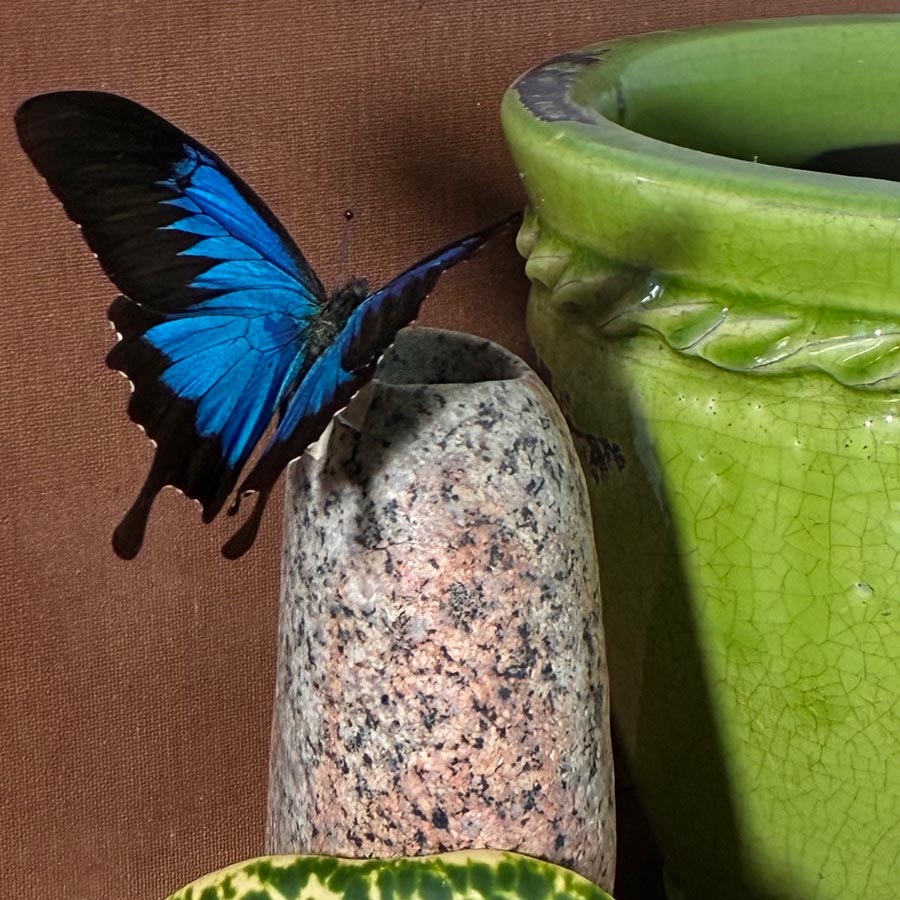
The original set-up

But hey, I’ve got Photoshop! As much as I would love to be someone who consistently paints from life and not photos, it’s just not logistically workable for me – I don’t have room to keep a still life set up, I’ve got a lighting problem, I’m not always going to be able to paint something in a single sitting. So in this case, I thought I’d take my lousy photo of my lousy still life, and see if I could make something less lousy to paint.

One thing I’ve found helpful when choosing a composition is to zoom way, way out on a photo and see if it still makes sense at a tiny size: Does my eye go to the right place? Does it still look harmonious? Can I even tell what I’m looking at? Looking at my photos of this set-up, I realized there were simply too many competing values, and it was the leaf (as the most detailed and high-contrast item) rather than the butterfly (my intended focal point) that caught my eye.

I started by working in Photoshop to crop out the leaf, mute the pot, lighten the butterfly shadow and bump up the saturation of his wing… everything I could do to ensure that the butterfly was the uncontested focal point.
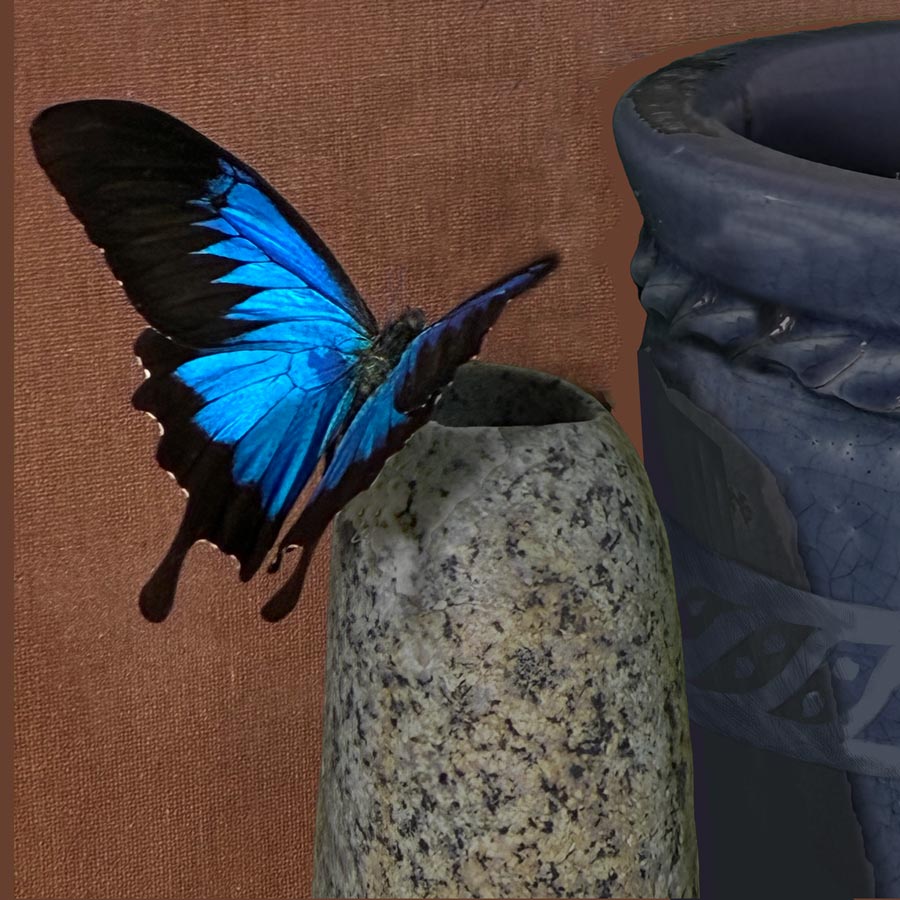
But that didn’t seem like enough — everything was still too mid-value and blah. So I continued to pick, until I’d basically recreated the whole thing in digital paint, completely reinventing the pot in the process:
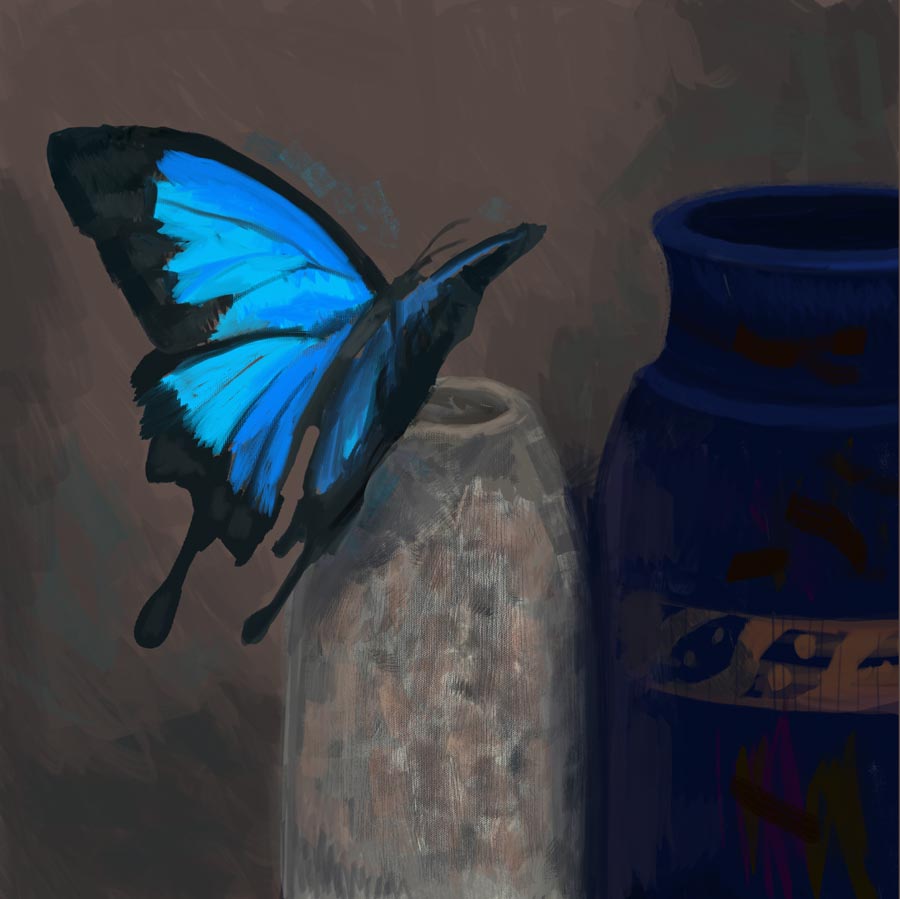
A much cleaner composition!

This is why I’m moving away from digital — as much as I enjoyed “painting” this, it still looks pretty darn digital. But it does give me something to paint that simply wasn’t available to me in real life. (I wish I did own this pot, though — it’s pretty cool!)
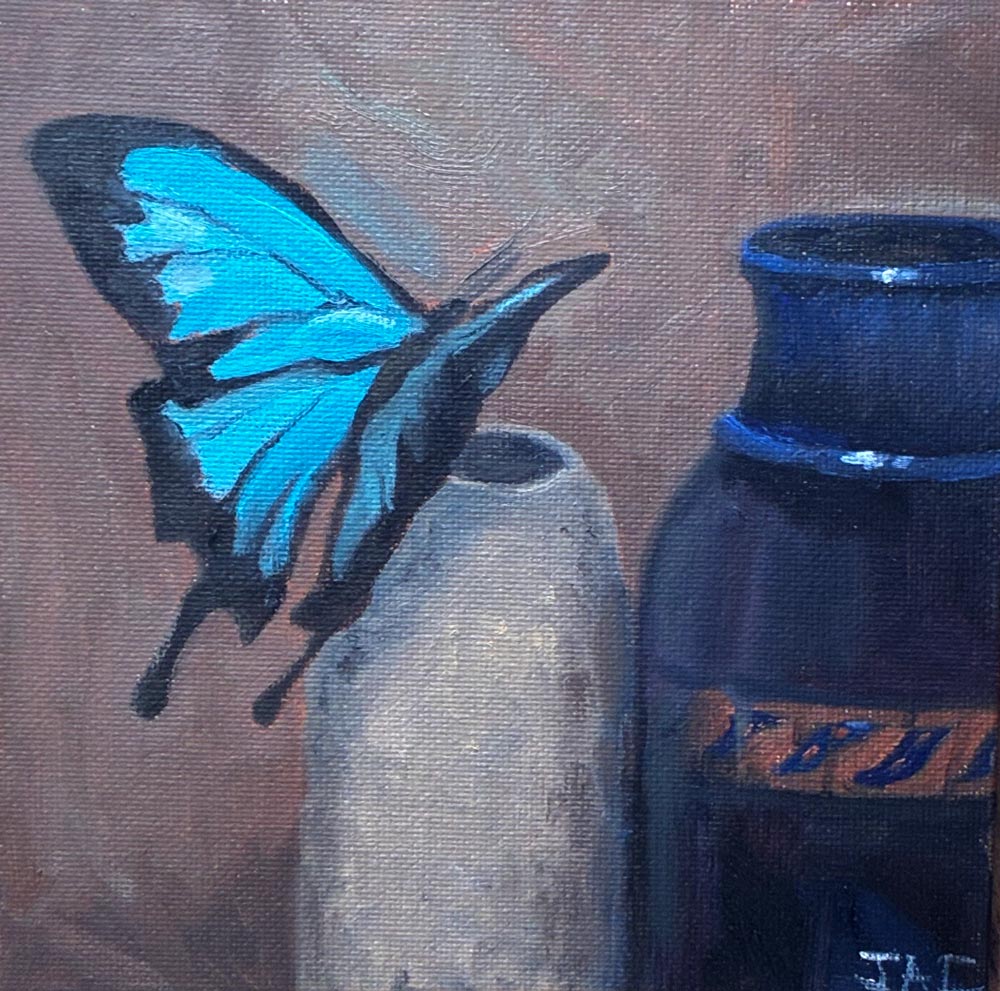
The finished product

This still isn’t great — it’s a bit…lifeless (even disregarding the dead insect that it’s built around). And unfortunately, I didn’t pay enough attention to my eye line, and the perspective is off. But I think I managed to take a sow’s ear and make it… a slightly prettier sow’s ear.

Onward!

Paintings 7 & 8: Getting my ducks in a row

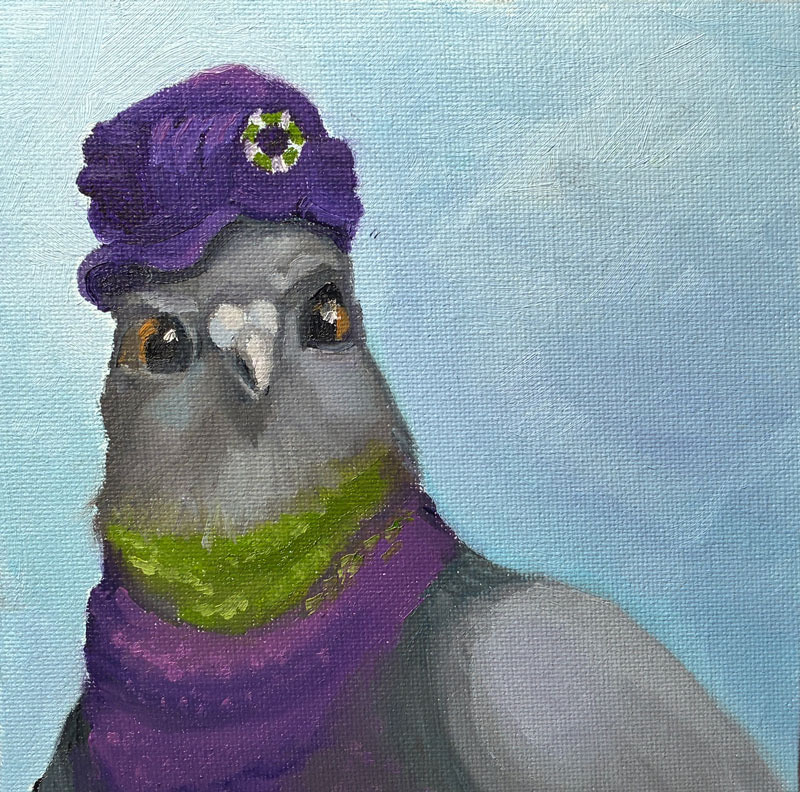
Fresh off the success of my “pigeon with a hat” painting, I thought I’d try something completely different: a duck in a hat! Maybe this will be my niche?

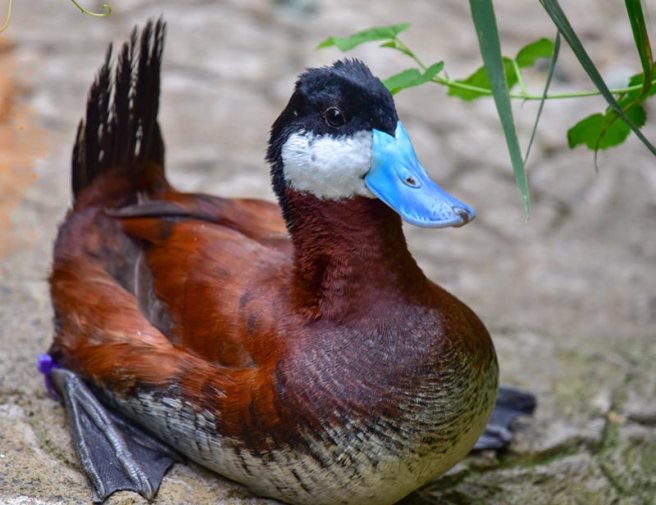
I’d originally anticipated painting a standard “barnyard” duck, but while looking for photos to study I came across this blue-billed marvel called a “ruddy duck.”

Copyright Sinclair Miller, Maryland Zoo in Baltimore

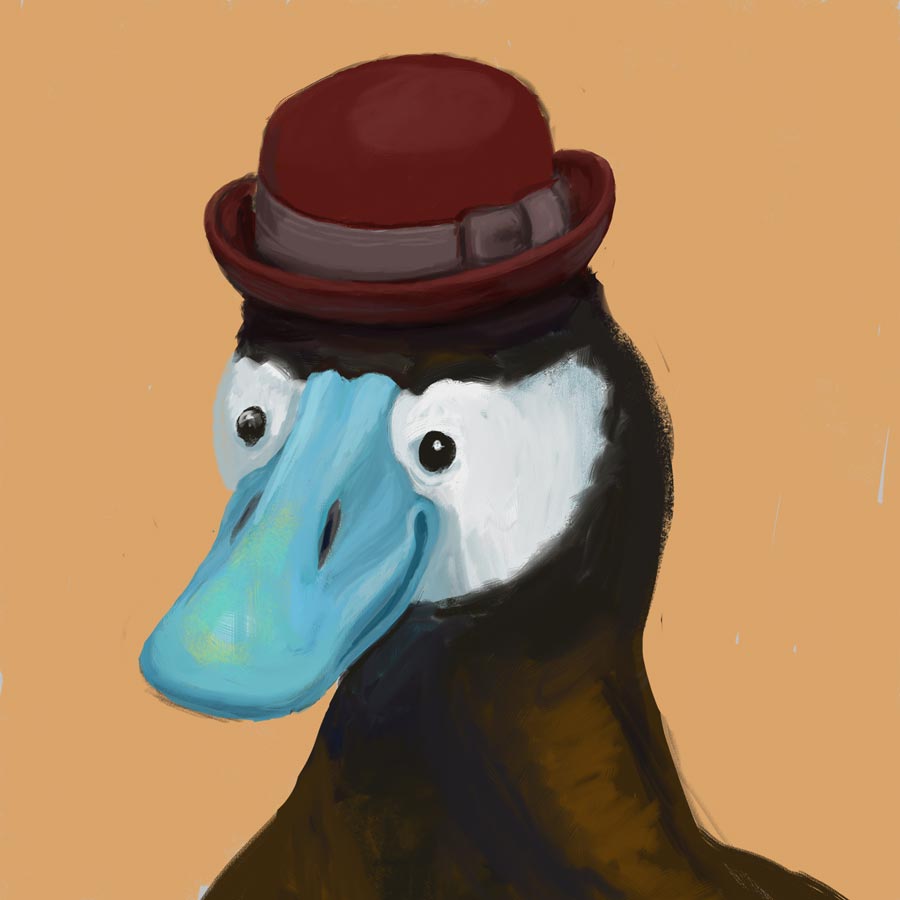
Here’s my original digital:

Good-lookin’ fella!

Apparently, my dapper gentleman is also a randy duck – the blue coloration only comes out when he’s hoping to mate (as does, of course, the stylin’ hat).

Since my pigeon was way off in her background-to-head ratio, I learned from my mistakes and blew up this feller larger in his frame than I’d originally drawn him. Then, rather than grid or freehand draw him like I did last time, I just printed out a black-and-white version of my digital drawing and used my graphite transfer paper to trace the lines of the black-and-white picture. But once again, I was foiled by my cheapness! Not wanting to waste too much printer ink, I used the “draft” setting, which created an image so washed-out and pixelated that I couldn’t follow the value changes, leading to mass confusion and a first painting that was yes, another “wiper.” 

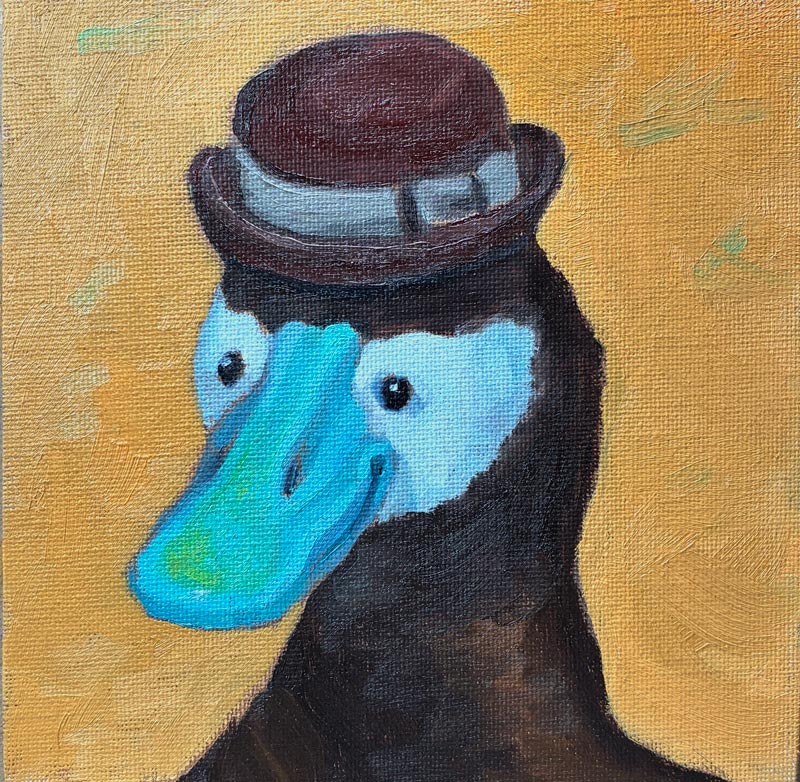
But we Irish-Lithuanians are made of strong stuff, and I set back in to try again. This time, I produced this:

Eek — need to up my photography game!

While it’s not terrible, and the beak turned out better than I’d expected in this second version, I made a giant mess of the hat — that little rim was tough! My background color, too, was not ideal: The orange—while a lovely color unto itself—is too saturated and draws attention away from the bill. Furthermore, Gemini had just told me that I should be painting with a 60/30 ratio of Gamsol to Walnut Alkyd, and my 50/50 mixture was too “fat.” So altogether, it seemed worth it to do one more pass, and begin to develop better processes and habits.

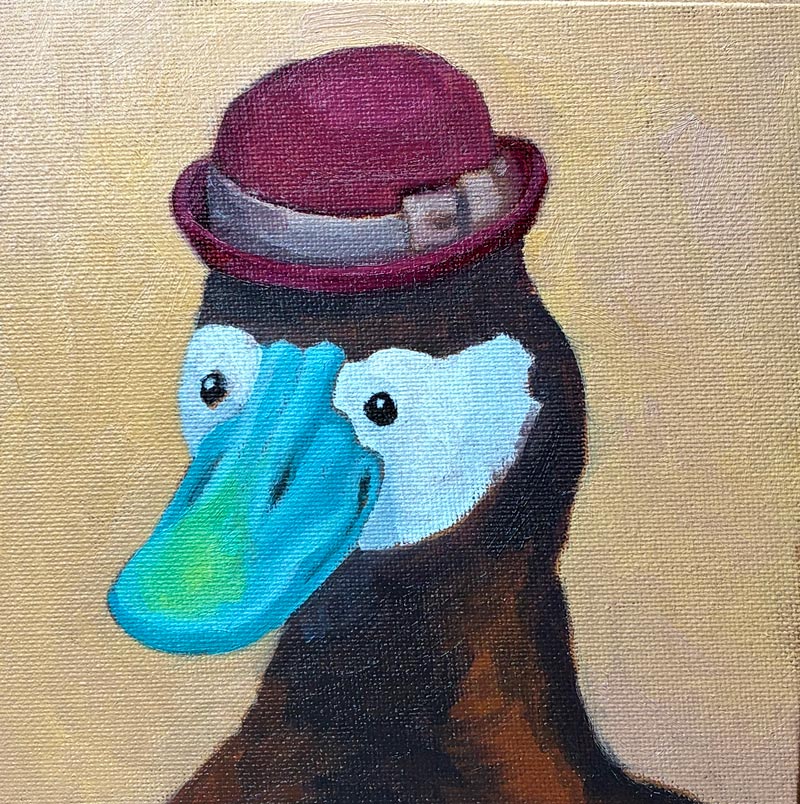
So, I went in for try 3, and produced this guy:

Mistakes, for sure — but altogether a very dapper gentleman!

“Well, I never!”

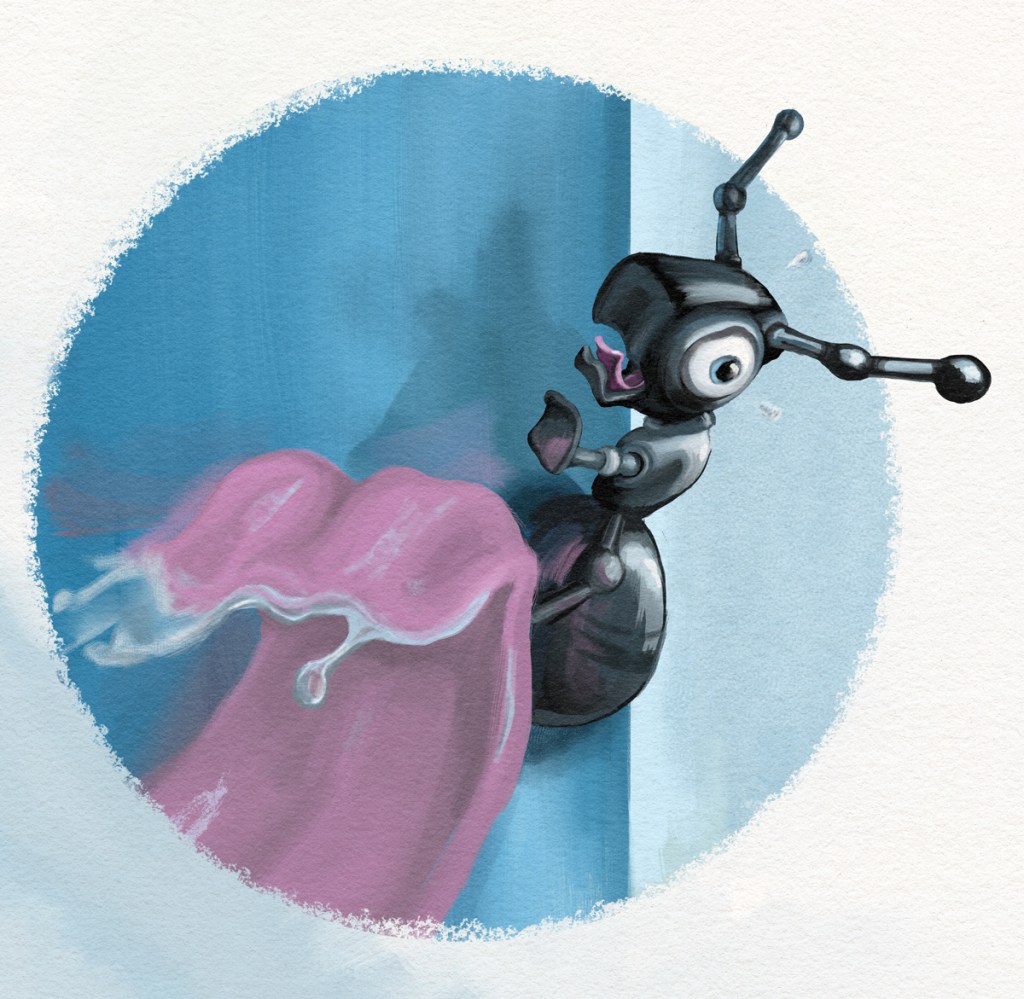
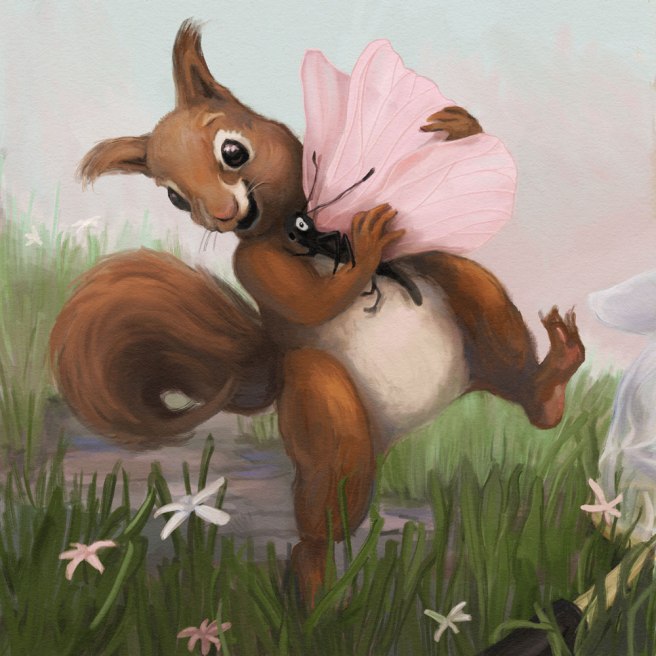
In my years of aspiring to be a children’s book illustrator, my “specialty” was emotive animals, like this terrified ant about to get scooped up by a hungry anteater:

So with my new dream of being an Etsy artist (no fine art aspirations for me!) I thought I’d see if I could create some original drawings that I would then attempt to recreate in actual paint.

What a pleasure to go back to digital after struggling with this new medium! And rather than worry about my finished product looking too “computer-y,” I could use my tools to figure out composition, expression, and color, and then give it the human touch in oils. This would also have the benefit of being reproducible, because I could grid it to create a template. I can almost smell the money!

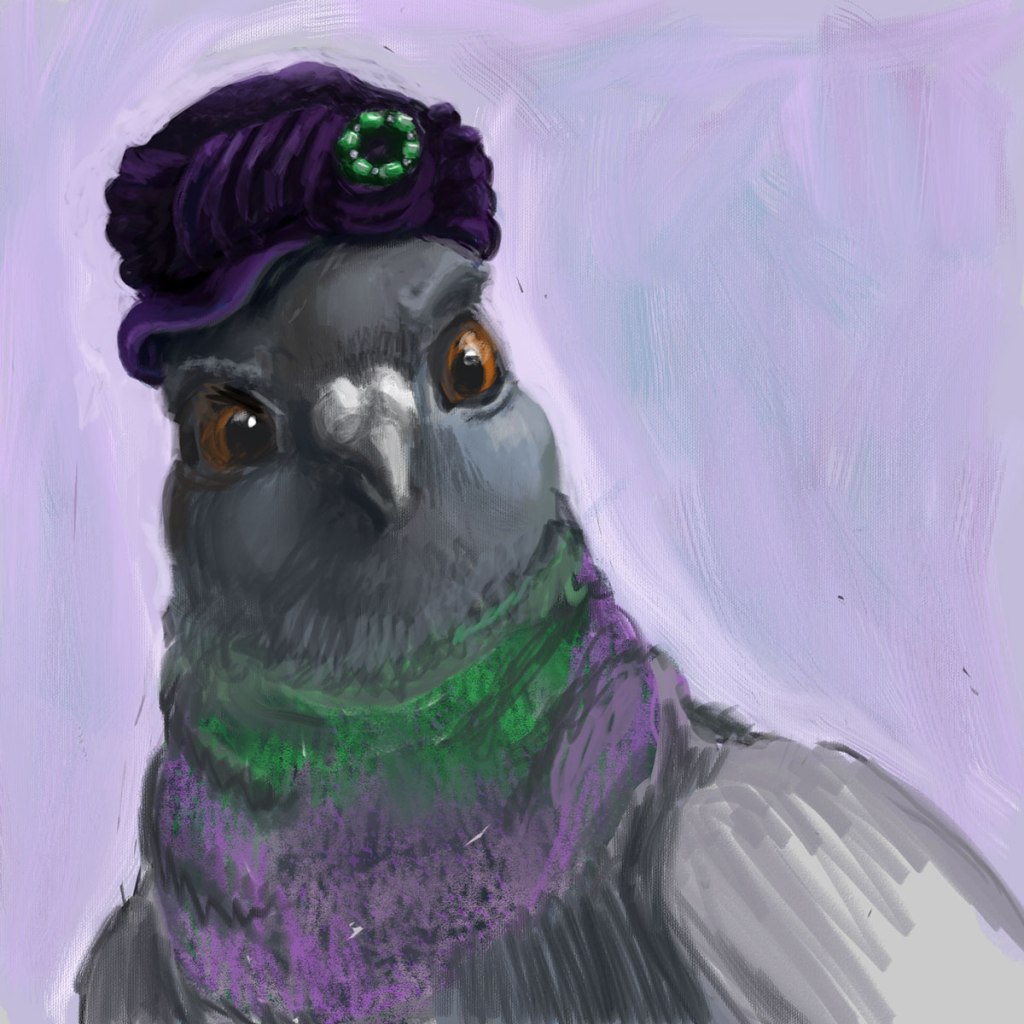
So, my first step was creating a picture of a pigeon in a hat. It’s rough, but I like her haughty expression and the rich purples and greens. I’m calling it “Well, I never!”:

Well, I never!

One thing I’d learned way back at the start of this blog was how to transfer an image onto canvas using a grid. In fact, I wrote a whole post about it. So I used Photoshop’s ruler with some guides, and marked the image on my screen into 6 1-inch squares, and then did the same on my canvas.

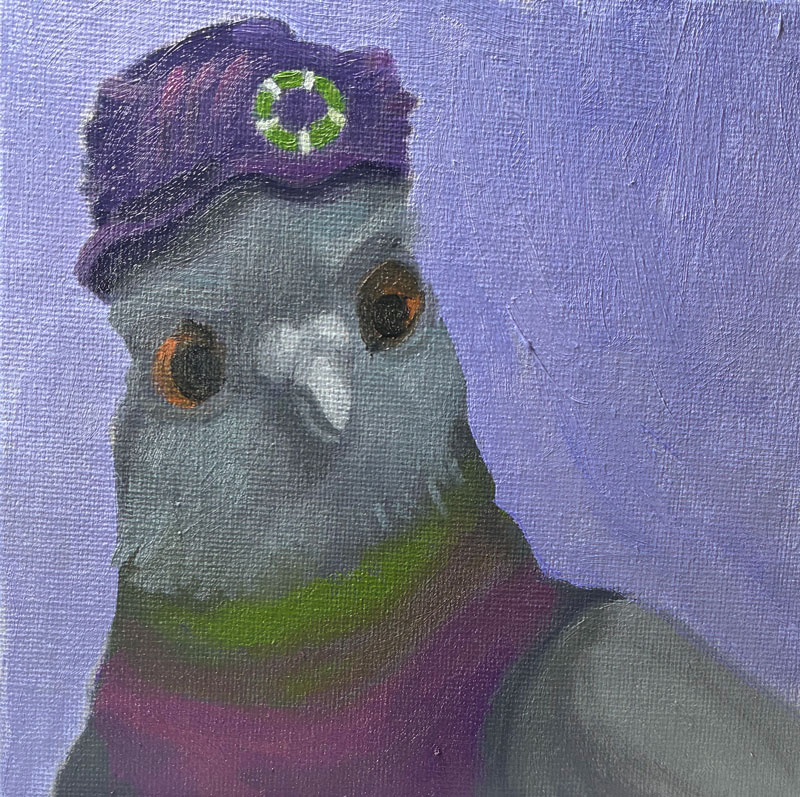
This method did indeed allow me to get (most of) the positioning correct, but it was time-consuming, and—frankly—pretty frickin boring, even for a tiny image. Moreover, I was once again tripped up by the actual painting, because in attempting to add detail in paint, everything got muddled again:

Clearly, I need professional advice! So I hopped over to one of my favorite cheap resources, Domestika, and watched the section on Portrait Painting with Oil that was part of this specialization series.

And I realized something — probably something obvious to anyone who’s been painting more than a week. I’d always heard that  with alla prima, you were blending paint right on the canvas. But in the video, the artist mixed her paints for each section ahead of time. Sure, there was some blending on the canvas, and some in-between tones that she mixed up on the fly. But she wasn’t just getting close enough and then attempting to correct it on the canvas like I was. Instead, she was being planful — putting down all of her darkest tones (one stroke at a time), and then moving down the line until she’d finished every stroke of the subject’s skin. 

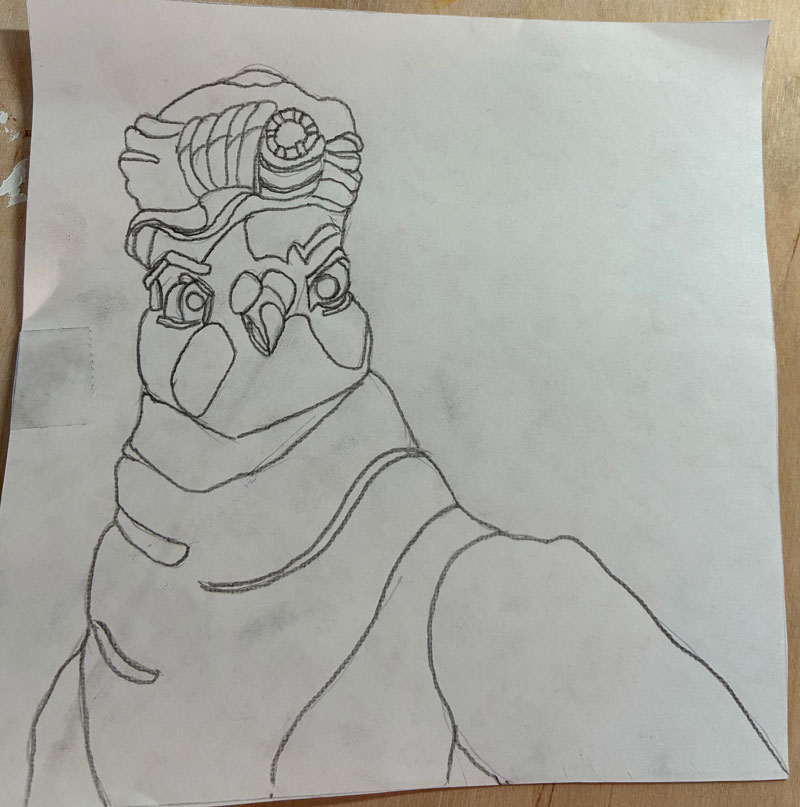
Worth a try! So, I started again — this time following the advice of my bestie Gemini and using Saral graphite transfer paper to first draw my pigeon on paper before transferring it to canvas:

Unfortunately, I did two things very wrong here. One — I attempted to avoid drudgery by free-drawing rather than gridding, which led to her having way too small a head and too big a background, and just being a bit “off” in her expression and physicality. Then, I thought it made sense for me to understand where all of my value changes were, so I added those lines right into my drawing, just like a paint-by-numbers. Yikes! Line overload! I ended up losing my way in them and having to once again edit on the canvas — though thankfully not as much as before.


But, but! I still think this represents a big leap forward for me. I’m sure I’ll cringe when I look back at this in a few months, but right now I’m feeling pretty proud!

Painting 4: Revenge of the pomegranates

Why painting 4 you ask? What became of 2 and 3? While I’ve sworn to document even my dismalest of efforts, I’m also not going to finish a painting that’s completely irredeemable (I’m lazy, remember. I’m also cheap — I’d rather save the paint and reuse the canvas). 

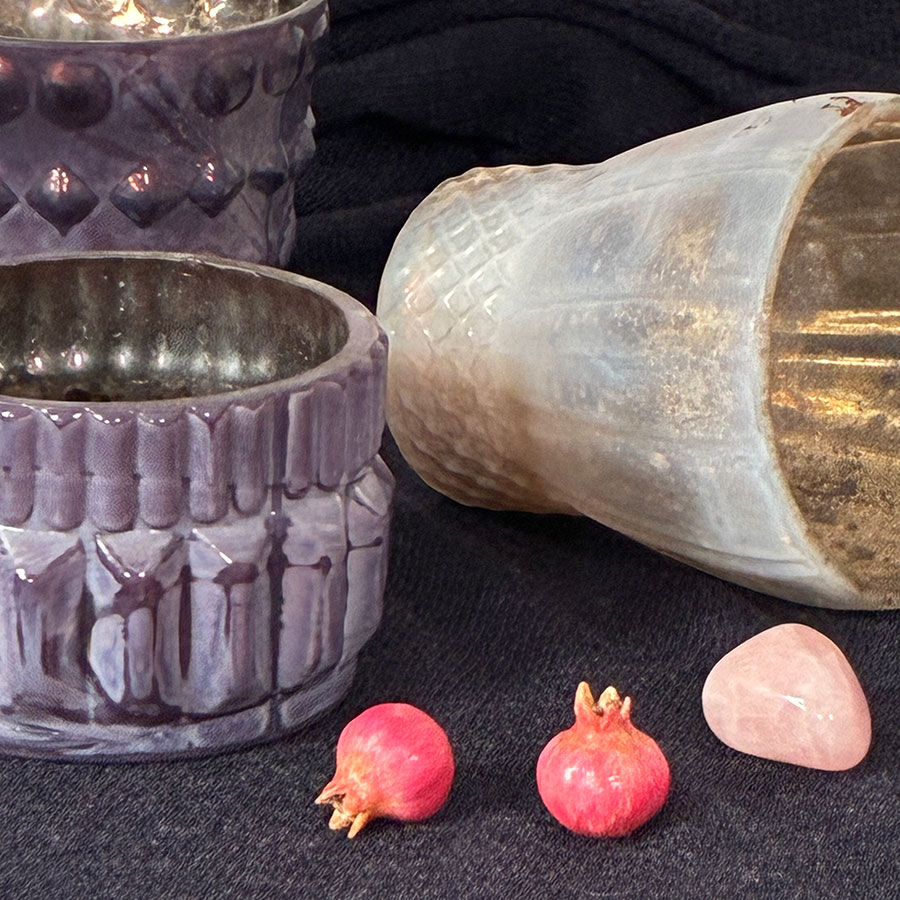
Since my bottle painting was such a raging success, I jumped right into another still life, this one even harder (cause that’s how I roll). Although I was painting from life and not a photo, this was the subject:

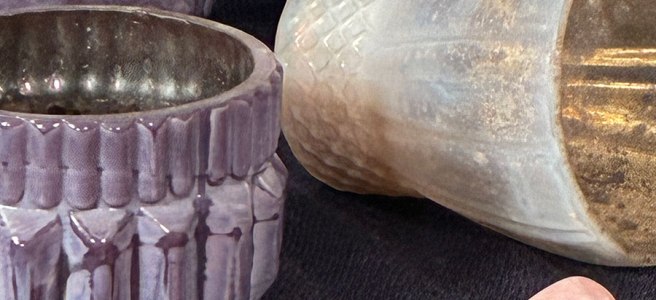
Pretty, right? Also very, very difficult. Now, over the years—since learning to draw from imagination at the tender age of 48—I’ve gotten pretty good at being able to picture something in my mind and draw it from any angle. But I need to really understand the form first, and I could not, for the life of me, understand the form of that purple candleholder at the left front. It has these sort of wedge shaped pieces radiating out like spokes, but the wedges are slightly rounded, and the top of the wedges are more triangular than the bottoms, which follow a gentle curve. Looking at it from a distance in my still life box, the random dark glaze plays all sorts of tricks of the eye so the whole thing just wasn’t making sense any more, and my paint kept getting gloppier and more muddled as I edited and edited.

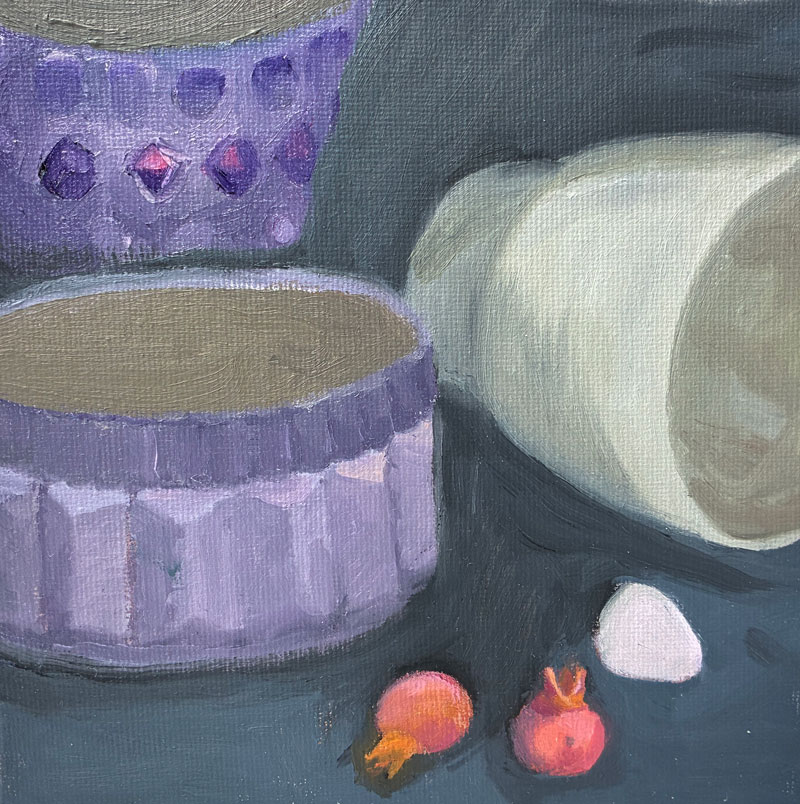
After two “wipers,” I finished a pass of this one:

Now, I say “a pass,” because even though I’m attempting to finish each painting in one sitting (à la alla prima), I was at a point where I could not add any more paint without it simply converging into the mud. So I thought I’d go back to the traditional method and wait for my paint to dry to the touch before adding more detail, finishing the insides of the cups, and perhaps editing. 

A few days later, however, I was not keen to pick this one back up again, nor was I ready to start over with it before first learning more about what I’m doing wrong. I’ll save this one for the future. 

Next!

More like “alla primate”?

In 1964, a Swedish tabloid unveiled the work of an “unknown French artist” by the name of Pierre Brassau. Critics rushed to praise him, with one prominent reviewer stating that “Pierre is an artist who performs with the delicacy of a ballet dancer.” The rub? “Pierre” was actually “Peter,” a seventeen-year-old, paint-eating, tantrum-throwing chimpanzee, gifted a set of paintbrushes to test whether critics could tell the difference between modern art and monkey art (yes, yes, I know chimps aren’t monkeys).

While Pierre’s work is more abstract than mine (…is attempting to be), our process is similar: alla prima, or wet-on-wet, a method by which a painting is completed in a single session rather than constructed from thin layers over a period time. Back in the early days of this blog, I was taking classes to learn to paint with this second (slooooowwww) method – as the Old Masters did – while also having a messy, dirty, passionate affair with the first. And when I decided to go back to painting, the first thing I did was dig up my old copy of Daily Painting, by the queen of effortless (-seeming) alla prima, Carol Marine.

Carol Marine

Oh, Carol. She’s like one of those fabulous French women who throw on mom jeans and a t-shirt and look like an it-girl, while me in the same clothes is more like Cousin-It-girl. Somehow the unstructured messiness of it all looks dynamic, passionate, effortlessly cool in her pieces, while in mine it looks like, well, monkey art:

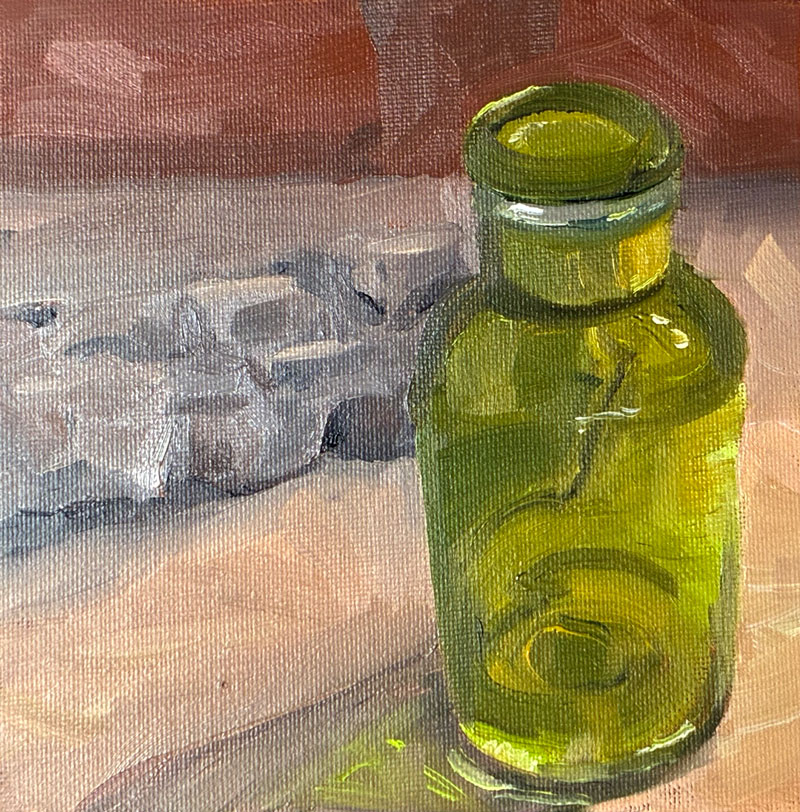
Looking at it now, I’m going to take back some of my charming self-deprecation to admit that there are actually aspects of this piece that I like. (Since writing this post, I’ve created a second painting that’s much worse than this one. You’ll see that one soon.) My bottle does indeed look like transparent glass. After wiping off my first attempt (and cursing myself for once again starting off with something too hard), I sketched out only those lines and value changes that were necessary to understand the form of the bottle, instead of once again getting lost in all those persnickety little details that the alla prima method struggles with. And taking Carol’s advice, I started my painting with the most saturated, pure patch of color – in this case, the chartreuse-y light on the right of the bottle – and once applied, left it the hell alone. So by that measure, I done good.

But what the heck is up with those proportions? Well, here rears the ugly head of my most prominent vice: laziness. In preparation for this still life, I’d made a still life box to control my light source – just a cardboard box with holes punched in the top and side for lights as seen on many a YouTube video.

Lazy moment #1 occurred when I realized my light-holes were too small and – rather than recut them – thought I’d use two rechargeable mini book lights instead of something more professional and permanent. And somewhere in the middle of painting, one of those lights died, and (lazy moment #2), I didn’t bother to replace the battery, thinking I could still see well enough.

But I couldn’t. That piece of driftwood in the back became a fuzzy hunk of grey, and (lazy moment #3), I thought I’d just paint it from imagination (instead of grabbing a new battery from the friggin next room) — which led me to envision it from the side rather than from the same top-down perspective I’d used for the bottle. Which led me to attempt to alter the top of the bottle to make it more side-on. And etc., etc. You give a mouse a cookie and all that.

And that’s the issue with alla prima, and why I fear it may not be for me. I’m much more of a “pantser” than a “planner,” and I love my control-Z. My process for artwork has always been to figure things out as I go along, and that just doesn’t work for a style that demands I get things right the first time.

But at least I’ve learned not to eat my paint. Onward!

I’m back!

…but no one would confuse the two, no matter how many pressure-sensitive brushes and canvas-simulating overlays I used. Meanwhile, my dream of being in bookstores felt further away than ever. I’d taken class after class in both writing and illustrating – even diving into an intensive semester at Hamline’s MFA in Writing for Children – but, frankly, no one wants to buy what I’m selling. 

So. I’m taking a step back. Rather than continuing to create work that lives only in my computer, reliant on outside gatekeepers to see the light of day, I’ve decided to go back to my original passion: oil painting. I’ll be once again delving into still lives (lifes?), but more than that, I want to see if I can transfer the skills I built from five years of creating narrative art into original paintings… that I can then sell on Etsy for oodles of money. And once again, I’ll be documenting everything: the bad, the ugly, and hopefully eventually the good(ish).

Join me!

Taking it slow

I’m sure everyone has a “worst day at work EVER” story, but I think mine can rival the best of them. I won’t get into the technical details, but due to a perfect storm of miscommunications I ended up DELETING the high-traffic website of a prominent organization. Luckily, there were server backups, and it was only eight hours of information that was permanently lost and not years, but the client was NOT HAPPY and is billing us for time they spent checking everything over; moreover, they’ll have their eyes closely on me for the remainder of the project. Ugh, the shame.

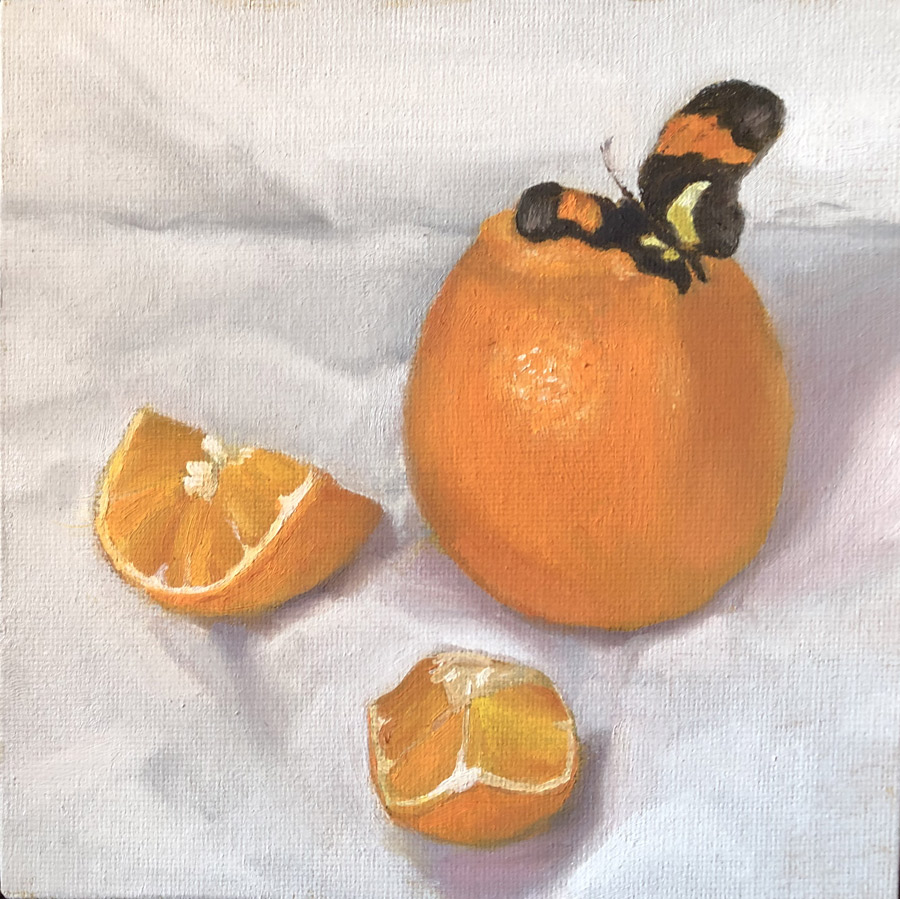
So it’s been a bit of a refuge for me to sit down and think about nothing but whether the shadow on my orange is convincing in this latest still life:

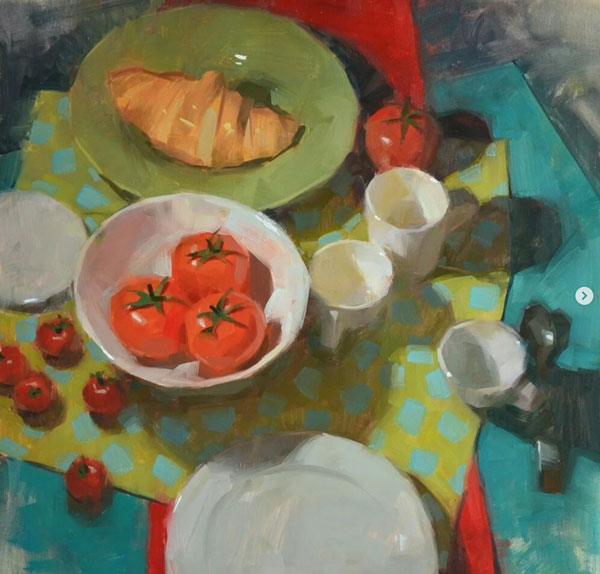
As I talked about a bit in my last post, I’m still trying to find my style… and clearly I’m looking everywhere! While I admire the Old Masters — and LOVE their color palette — I respond most viscerally to work that looks more, well, visceral — loose, raw, and emotional, even if the subject is only sliced oranges.

Unfortunately, when I try to paint alla prima in a loose, bold style, I end up with a sticky mess — it doesn’t look free and raw, it looks unfinished and incompetent. Meanwhile, the more careful work we’ve been completing in class — where we labor over each painting for weeks — ends up looking better to me. Heart-singingly better? No. But slightly less amateur.

So after setting up this still life, I painted only until I began to feel tired — no longer. Then, the next day, I fixed a bit of what I’d done and painted a bit further. And etc., and etc. And although the work looks a bit…labored… I felt loose and free because I wasn’t under the gun to stick with the dang Daily Painting credo. Now I just need to find a way to make my painting more expressive and less “tight” while actually taking it slow.

I’m also still trying to figure out what to do about light. Every morning — if I don’t close myself into my new curtained cave — there’s a moment when the sun first crests over my third-storey sills and for just five minutes or so makes the most perfect pool on my still life. When that happened, my days-old orange slices would suddenly look fresh and juicy, there would be gorgeous swaths of bright fresh sunlight mottling the sheet, and I’d rush to get my camera, only to find that it sucked the life right out of what I was seeing. I’d attempted to produce the same effect artificially — using several carefully positioned daylight bulbs — but everything I’ve tried has fallen far short. I guess I’ll just need to someday learn to paint in hyperdrive (or look over the shoulder of Thomas Kinkade). But for now, I’m taking it slow!

Things I did well:
I like the pinkish shadows that the orange was creating. I also like the two sliced oranges. They look a bit dried out, but in truth they were mummified by the time I finished.

Things I could do better:
The composition is still a bit staid. This is the part I thought would come naturally to me!
It looks as if the butterfly should be creating a harder shadow. I believe that’s a fault of the composition — the butterfly was actually pinned too far above .
The texture on the orange isn’t convincing — it looks like the side of my nose. I’m still not sure how a convincing orange texture is attained!

Street scenes in San Antonio

For spring break from my daughter’s school, the three of us joined our friends Dave and Sinee on a trip down to San Antonio, Texas, where Pete and I used to live before having Olive. Neither of us had been back for fifteen years, and Dave and his daughter never at all, so we were all essentially tourists, and did all the touristy things I never managed to do in my five years as a resident: boat shuttles on the riverwalk, SeaWorld, the Alamo.

Except for my classwork, I’d been painting exclusively still lifes, and I was excited to use the opportunity of outside time in a colorful city to take some photos to paint from. As I’ve mentioned, I’m a fan of Carole Marine, especially her street scenes, and I wanted to see what I could do with similar subject matter.

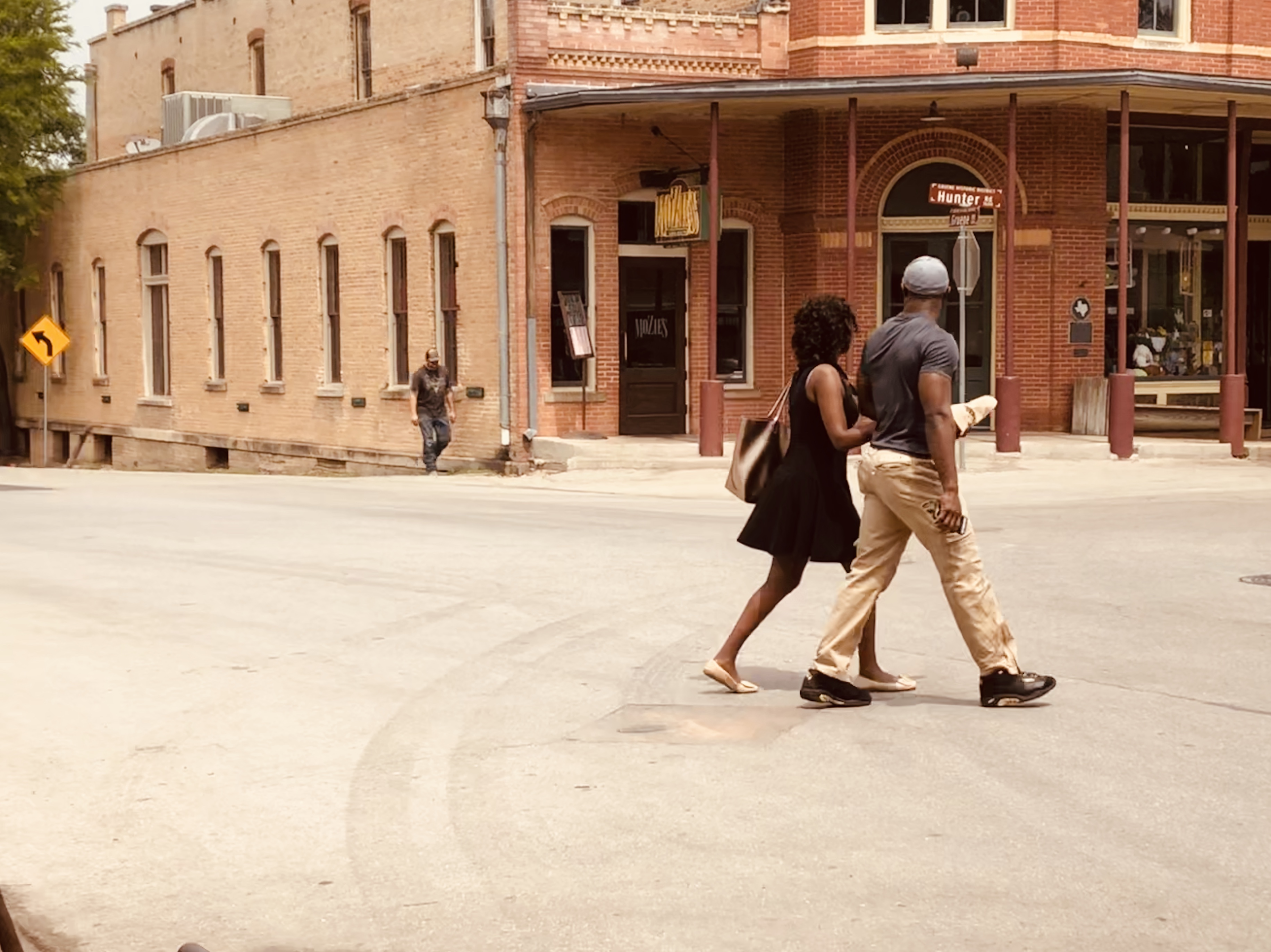
Once I got over my initial self-consciousness of feeling SO touristy (taking photos from a tour boat on the Riverwalk? Could I be any more cliched?) I did take some interesting pictures, though most wouldn’t work for my purposes:

Unfortunately, I rarely take photos, and I wasn’t aware that when I zoomed in to get a good simple image with my iPhone 6, I’d end up with something like this:

This one painted itself! Nothing left to do!

When we got back from our trip, I printed out a few of the more simple ones to try (I’ve since realized I didn’t need to have a hard copy — I could just have them open on my laptop. So much easier!). First, though, I bought Carole Marine’s ArtByte tutorial on painting people. The tutorial was so simple to follow, and –like Bob Ross before her — she made it look incredibly attainable.

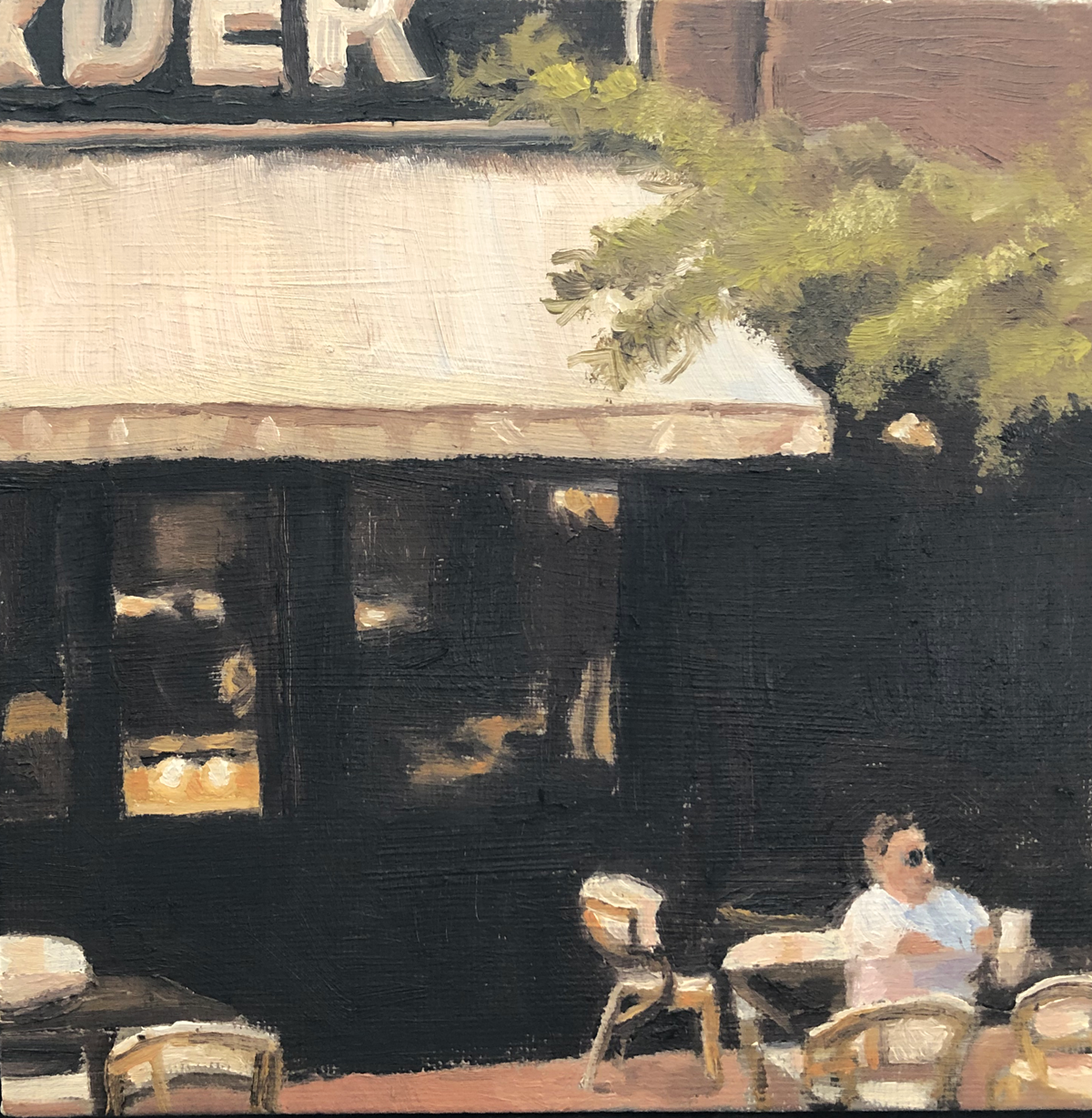
Here’s my attempt:

I’m pretty sure that where I went wrong here was in attempting to do too much in a very small space. This was only a 6″x6″ canvas, which makes the guy, and all those little chairs less than an inch high. Looking at Carole Marine’s street scene paintings again, it does look as if she limits herself to a smaller number of larger-sized people when she’s painting her small canvasses, because this kind of expressive painting just looks messy at a small size.

I also found that at this small size alla prima was really limiting. In fact, I’ve been thinking that my attempts at Daily Painting — completing a work in a small period of time, hopefully fairly regularly (though not daily) — are hurting rather than helping. When attempting to paint the details of the chairs, they were so tiny and the paint was still so wet, that it was nearly impossible to neaten it up and make my colors work the way I wanted. It would’ve made more sense to put this down for a few days and come back to it when it had dried enough to finesse it, but I felt pressured by the Daily Painting credo. I’m also wondering if attempting to paint expressively is right for me right now — I think I need to focus on trying to learn the rules before I break them!

Some rethinking to do…

Back to school!

During the time when I was kept from the gym by my splinter (now healed), and kept from my studio by Jim’s admonitions on my light situation (now fixed), I was also kept from class by… well, there wasn’t any class. It was spring break (now over).

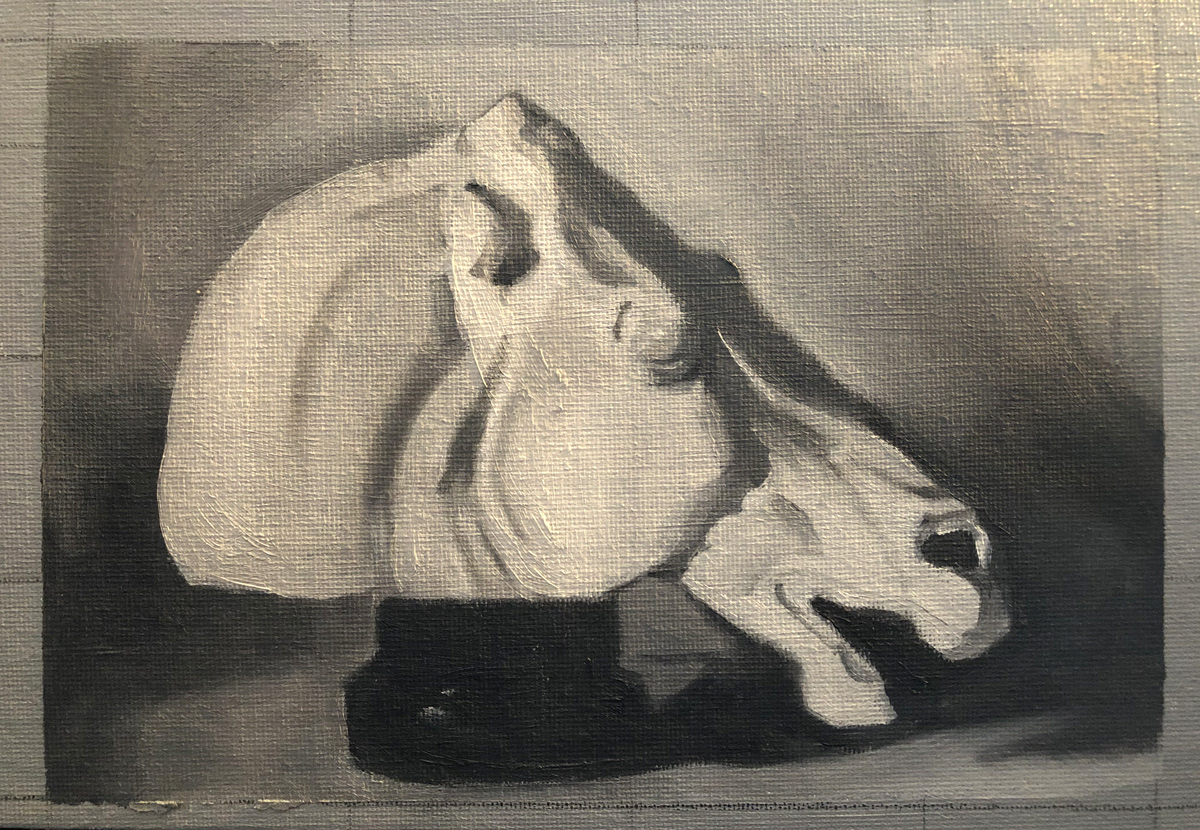
Since the assumption at The Art Academy seems to be that once you’re there, you never leave (there are people there who have been working on the same painting for years, apparently), there was no rushing to finish up the marble horse head paintings we were working on before we left before break; they were there waiting for us when we got in.

It was weird to go back to grey after my forays into color, but much much easier. I realized that I’ve been a bit lazy when it comes to color mixing at home — often I just mix something I think is in the ballpark and then go back and tweak it after the fact (that’s the beauty of oil painting — it’s incredibly forgiving). So I have been asking myself whether painting with color on my own is even a good idea — am I just teaching myself bad habits? I continue with it, though, because it’s fun, and ultimately, even if truly imperfect, I like the results much better — who wants to keep a grey painting? The last thing I want is to start feeling bored and uninspired — I figure, anything that keeps me painting on a regular basis has got to be for the best.

For this painting, we did what Jim called a “lay in”: We spent a couple of sessions painting the horse in a simplified form — blocking in the outline, background and some of the shading — and then our reference images were switched for others that had a lot more detail and we spent a couple more sessions painting those as well. The biggest issue I found was that in between session one or two of the detail work, I was given a different reference image (a common issue — I think they’re just handed out randomly in each class, and they’re all a bit different) and all the details were in different places than they were when I started them. This threw me for a loop, but Jim insisted that it really didn’t matter — ultimately, the exercise was just to practice recognizing and reproducing subtle values, as well as the process of first blocking in a simpler shape and then coming back to it for detail.

To me this felt like a big leap ahead from the box paintings we did for our last project, but completely manageable. Of course, I’ve obviously been painting on my own, but even if I hadn’t it would’ve still felt like the logical next step after shading and blurring. My nerdy self is still very excited by just how systematic this program seems to be. Looking forward to the next project!

…And one step back.

It’s funny how I can mention the same thing week after week — “I did a good job with my values,” “We’re waiting on color so we can work on our values,”– and still manage to miss the mark. I’d been admiring the work on Etsy of this amazing Ukrainian pet portrait artist, and wanted to see if I could create a background like his — loose, unstudied, the perfect complement to the (also perfect) subject. Turns out…I couldn’t.

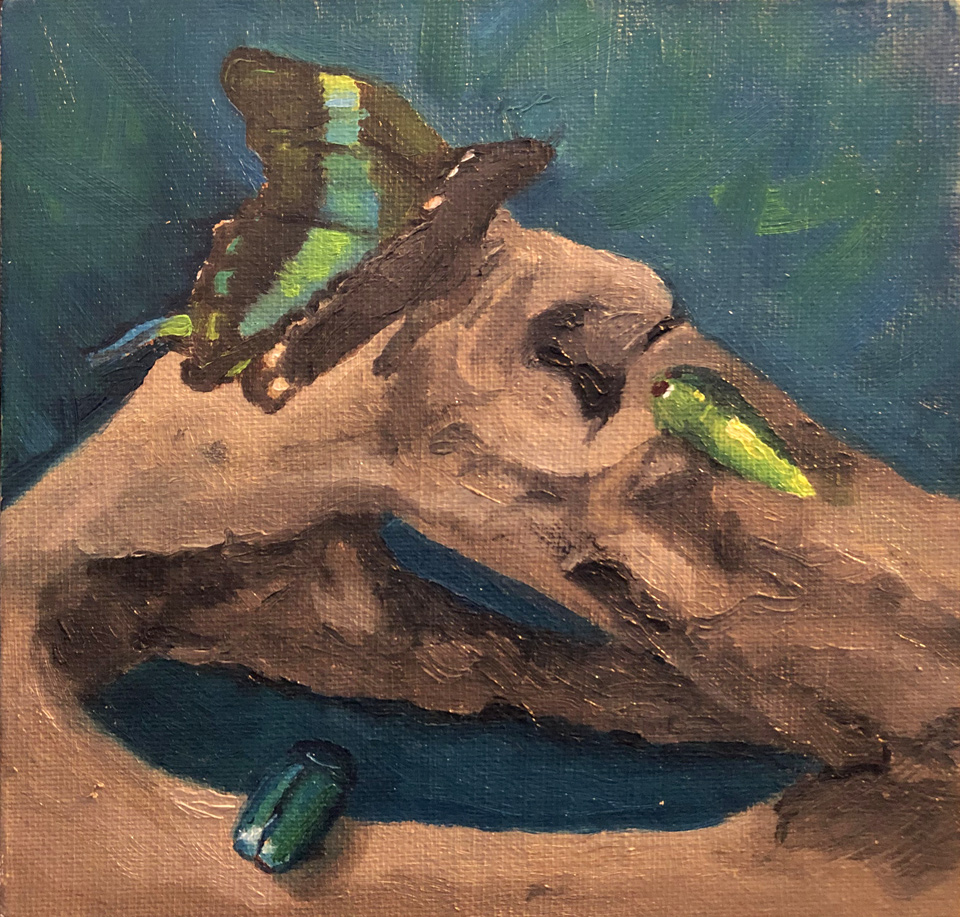
My original thought was that the green bug would be the focal point and the butterfly and blue beetle would be a similar color to the background and therefore less prominent (I’d read that the area with the most contrast draws the eye the most and should therefore be your focal point). And it is true that parts of the butterfly and blue beetle are fairly subdued next to the dark background — their values are fairly similar. But instead of doing what I should’ve done — simplifying and darkening the background beneath the green beetle so that the contrast is greater, perhaps increasing its size — I plopped a very small beetle on top of a busy area of varying values. Perhaps, if you squint, you still notice it first because of the contrast between the bright yellow and the very dark green beside it, but it’s a close toss-up with the butterfly wing (which has the advantage, of course, of being much larger), and that, in my opinion, makes for a pretty unfocused painting.

While I’m glad that I don’t have even more detail in the background, I’m no Ukrainian Etsy artist. It would’ve been helpful to have a horizon, or some depth of field, and certainly the line of the driftwood should’ve been softened to integrate better with the background. As it is, it looks more like a collage than a painted-from-life still life.

In general, though, the entire thing is just way too complex for such a small (6×6) painting.

What?! Way too complex? Who are you, Jennifer Caritas!

(As an aside, if anyone’s curious about my subject matter, I used to make these fancy insect displays, and still have tons of insect inventory. Look for more bugs in future paintings!)

What I did well:
Individual elements are okay — I actually quite like the blue beetle.
I attempted some brushwork of varying directions and colors — a first for me. A for effort!

What I could’ve done better:
Too much going on!
Too much similarity in values — need a more obvious focal point
Better integration with background