Street scenes in San Antonio

For spring break from my daughter’s school, the three of us joined our friends Dave and Sinee on a trip down to San Antonio, Texas, where Pete and I used to live before having Olive. Neither of us had been back for fifteen years, and Dave and his daughter never at all, so we were all essentially tourists, and did all the touristy things I never managed to do in my five years as a resident: boat shuttles on the riverwalk, SeaWorld, the Alamo.

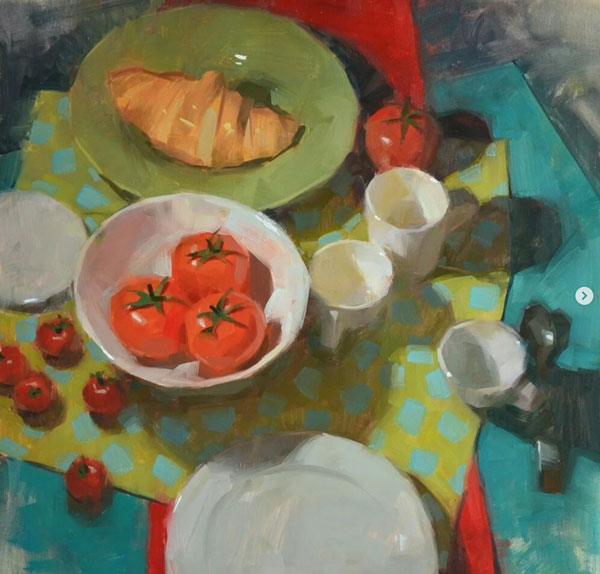
Except for my classwork, I’d been painting exclusively still lifes, and I was excited to use the opportunity of outside time in a colorful city to take some photos to paint from. As I’ve mentioned, I’m a fan of Carole Marine, especially her street scenes, and I wanted to see what I could do with similar subject matter.

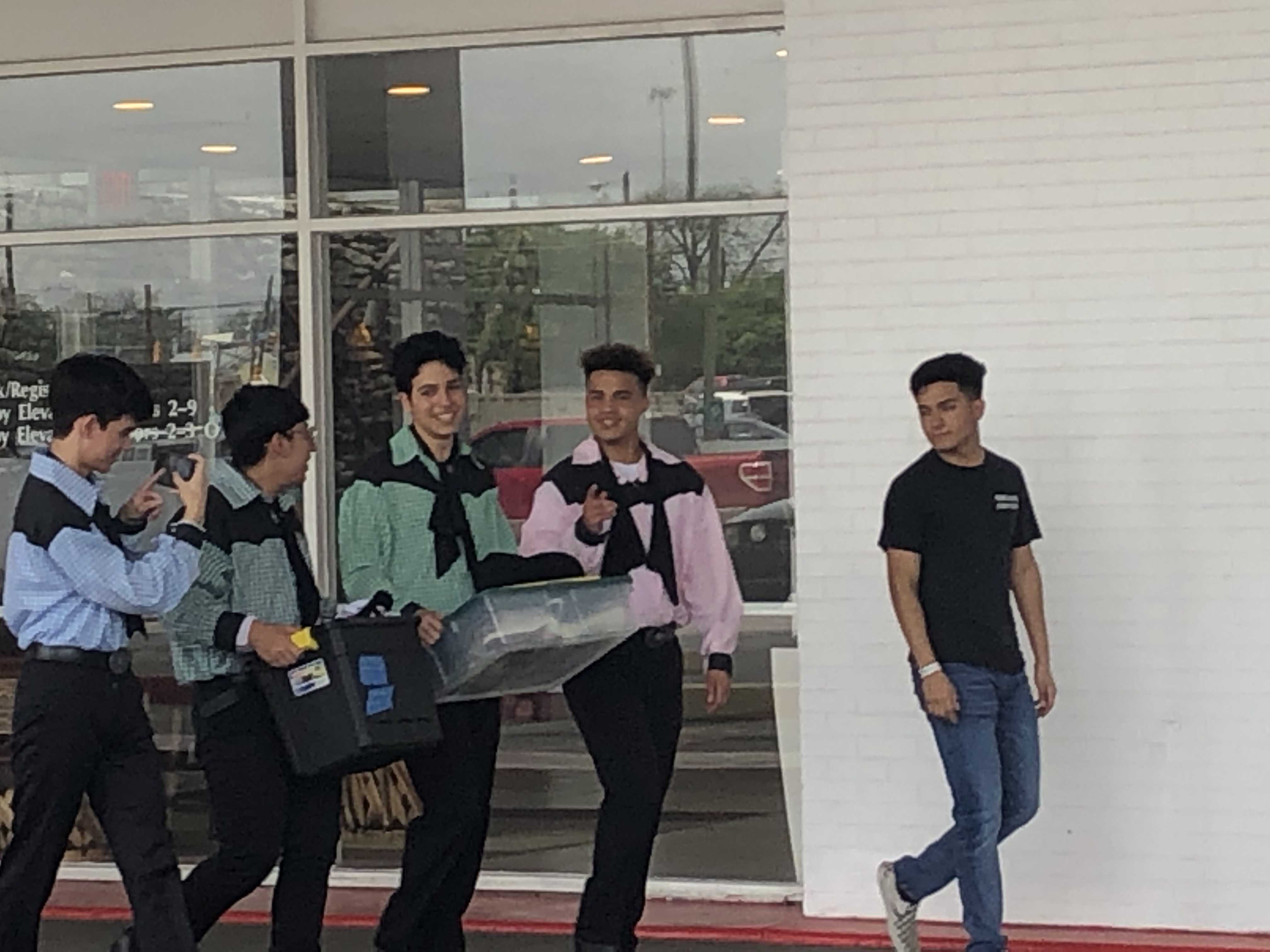
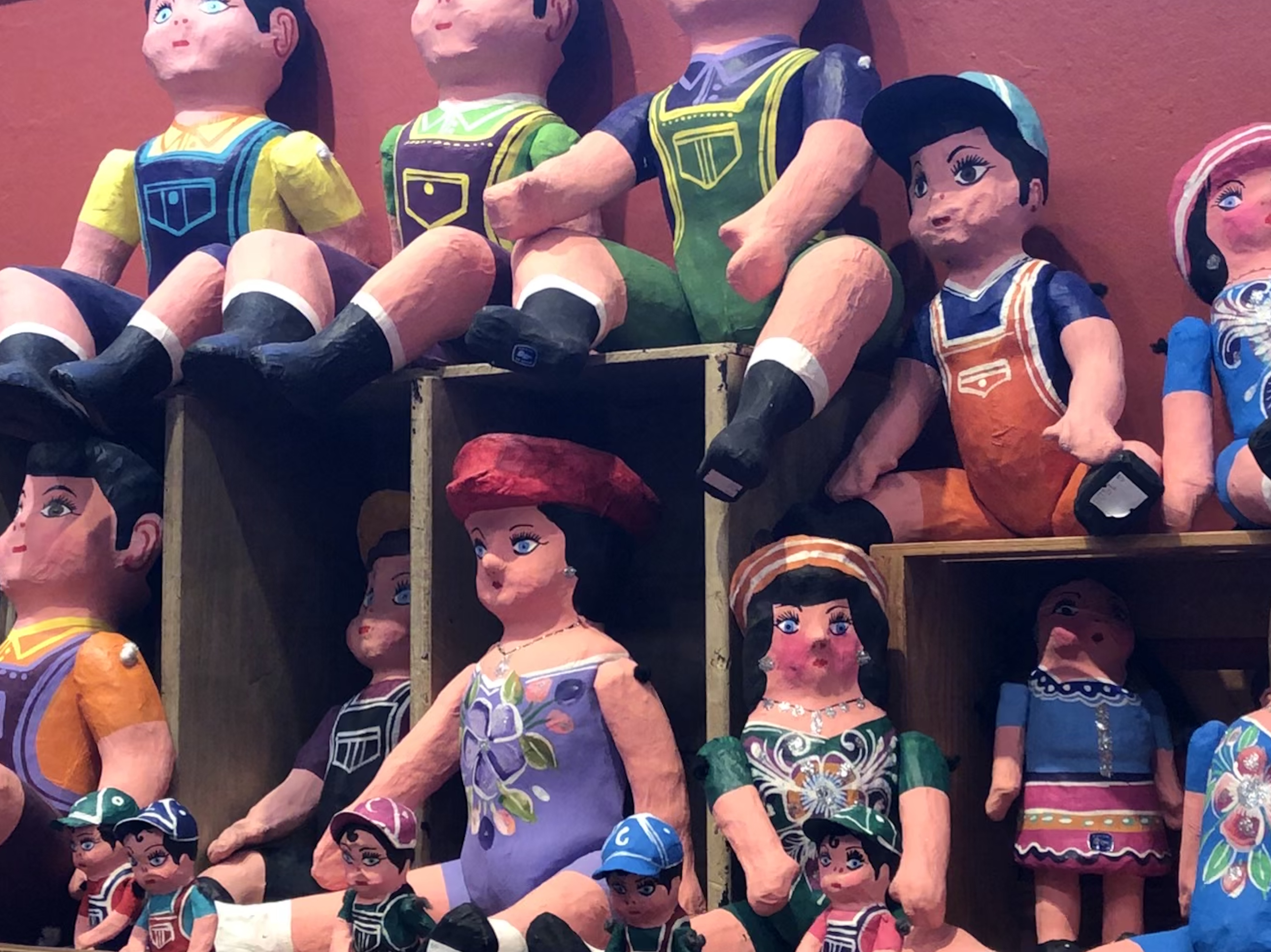
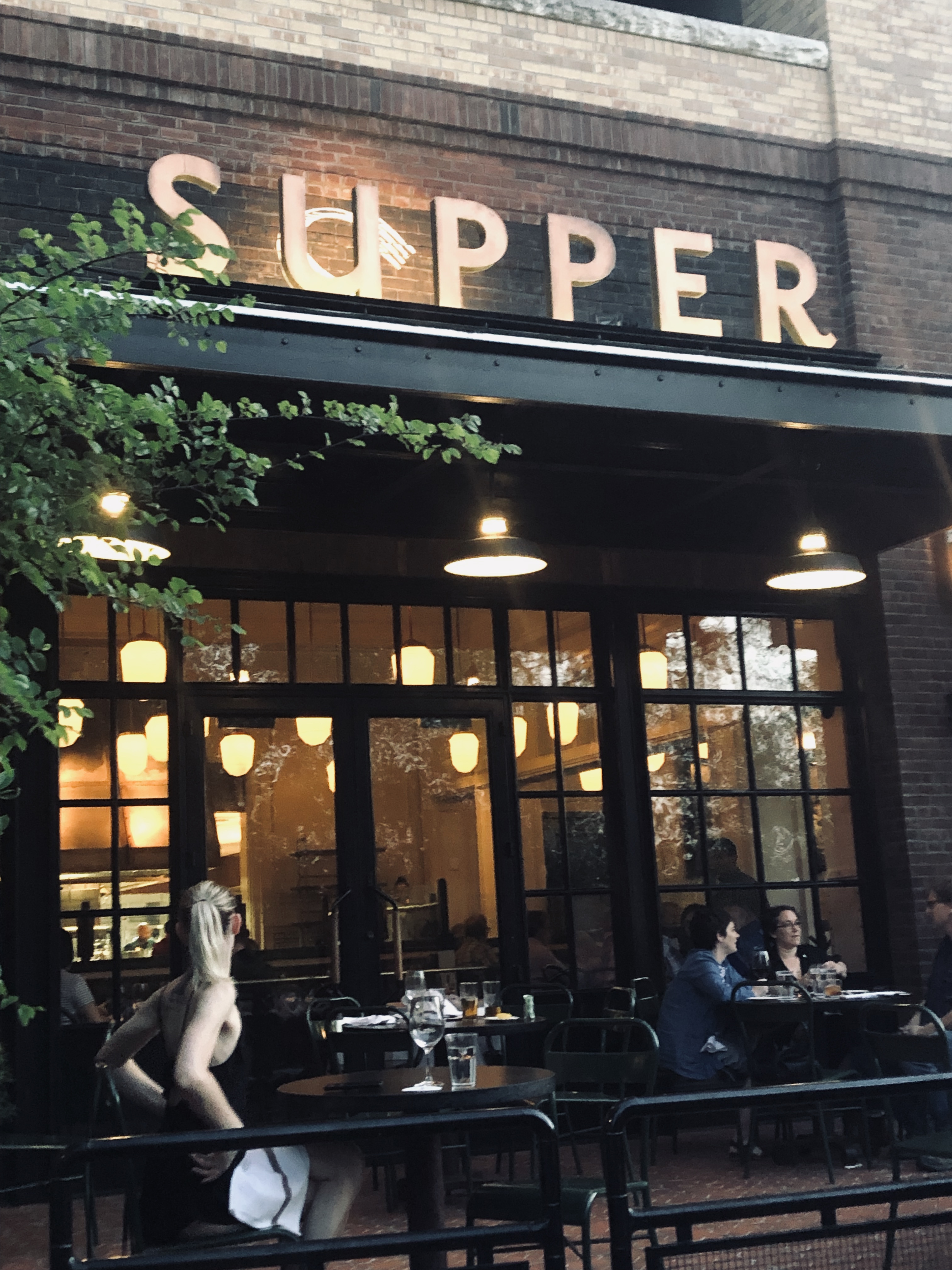
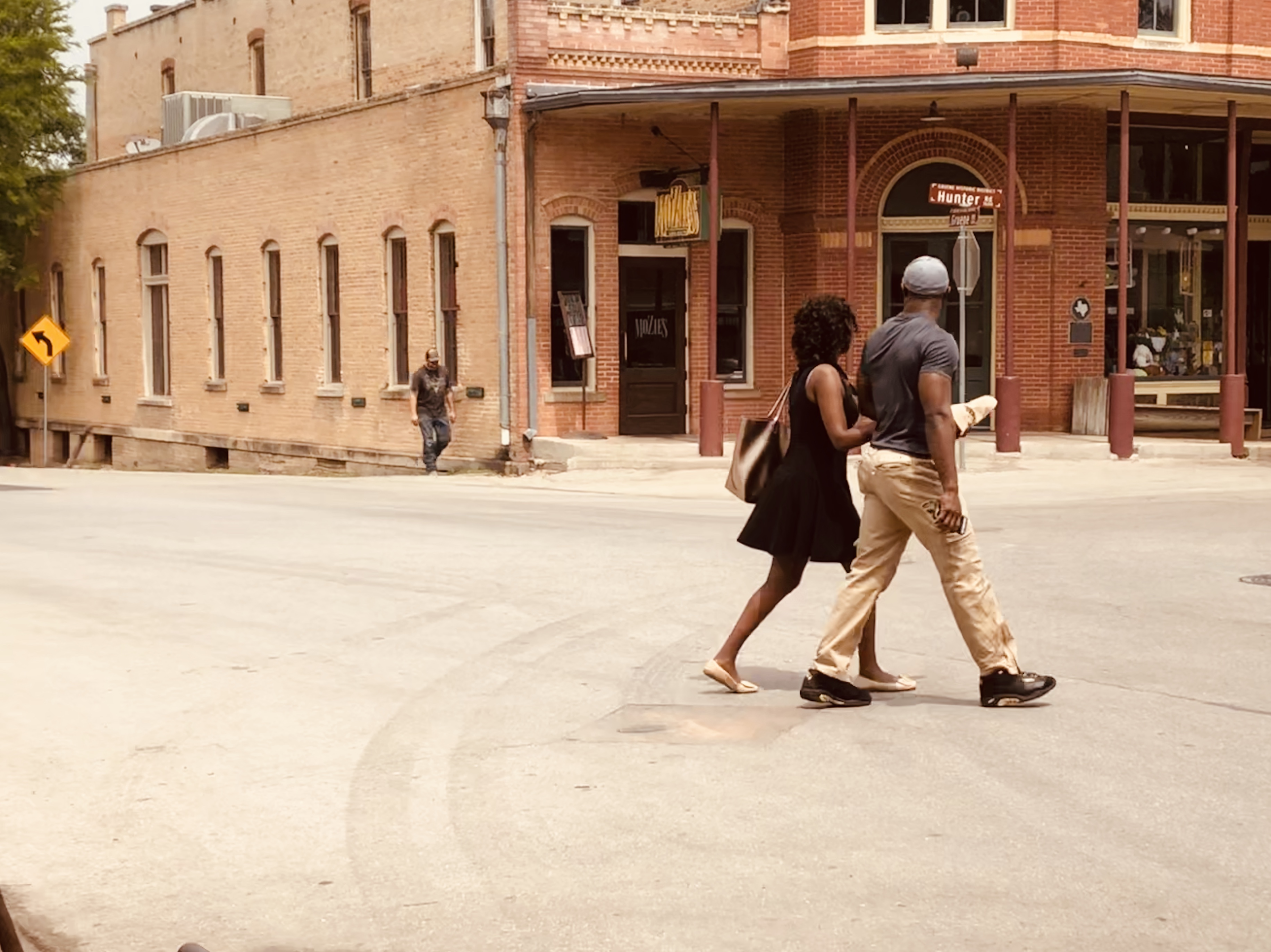
Once I got over my initial self-consciousness of feeling SO touristy (taking photos from a tour boat on the Riverwalk? Could I be any more cliched?) I did take some interesting pictures, though most wouldn’t work for my purposes:

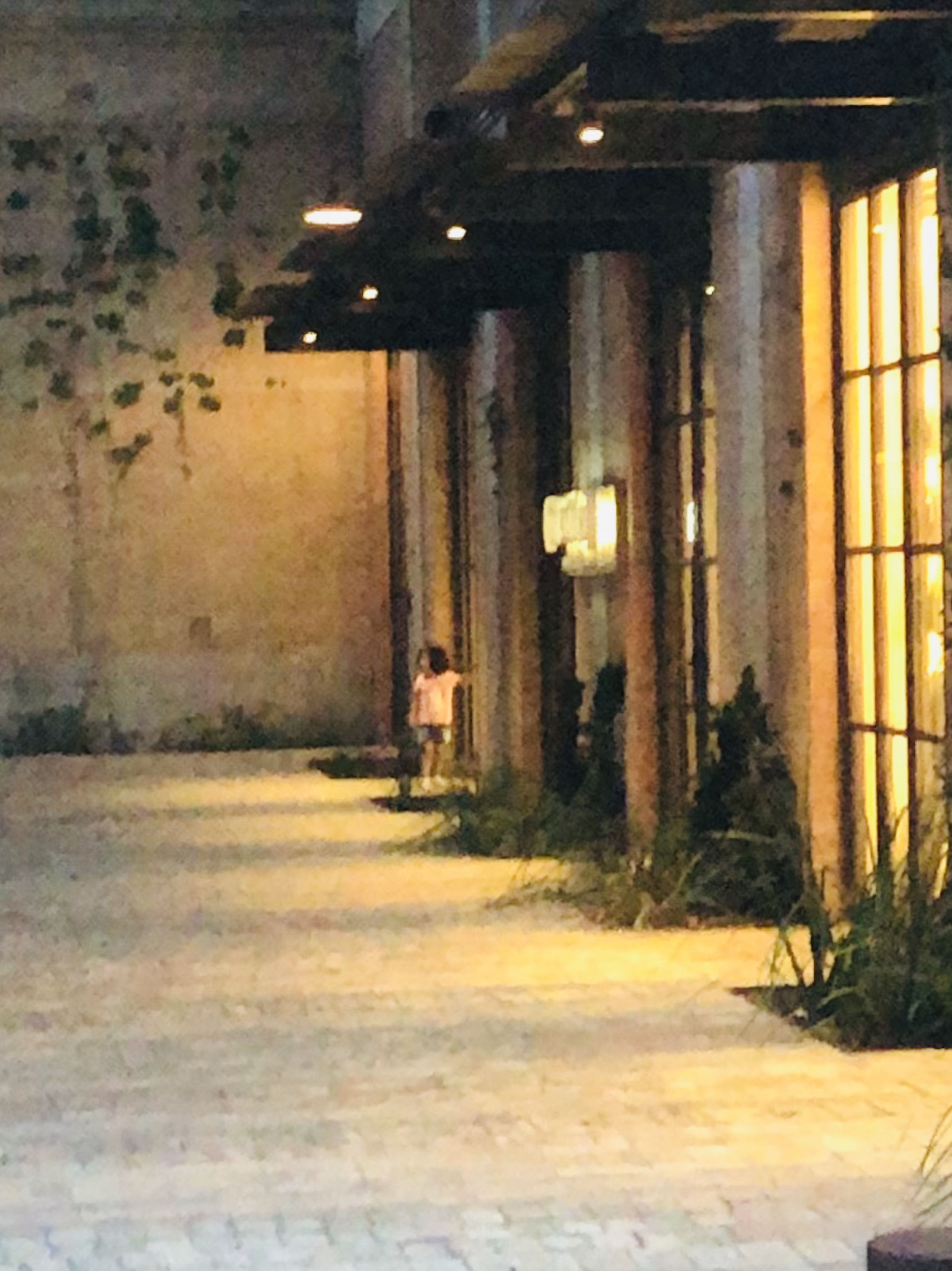
Unfortunately, I rarely take photos, and I wasn’t aware that when I zoomed in to get a good simple image with my iPhone 6, I’d end up with something like this:

This one painted itself! Nothing left to do!

When we got back from our trip, I printed out a few of the more simple ones to try (I’ve since realized I didn’t need to have a hard copy — I could just have them open on my laptop. So much easier!). First, though, I bought Carole Marine’s ArtByte tutorial on painting people. The tutorial was so simple to follow, and –like Bob Ross before her — she made it look incredibly attainable.

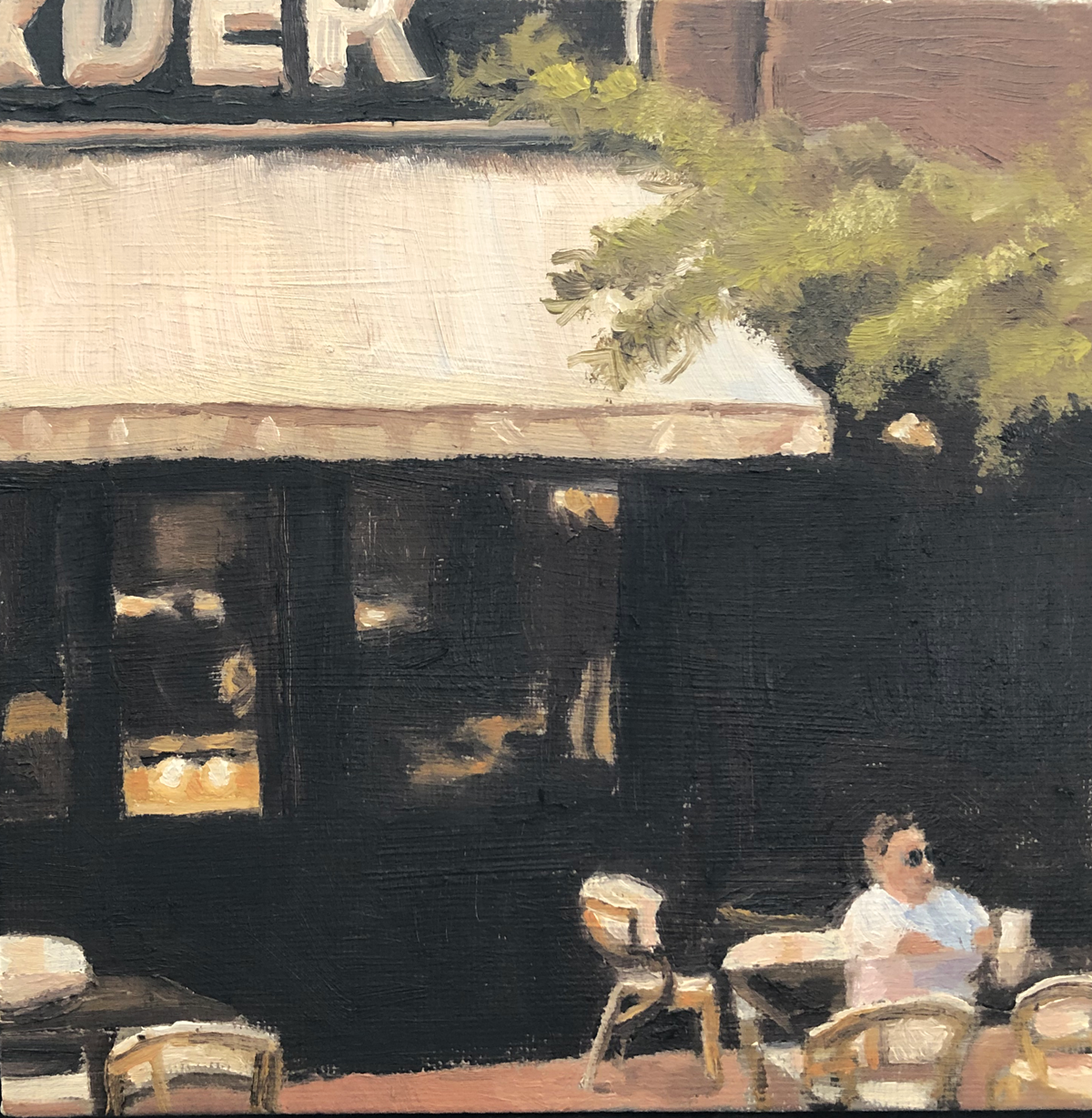
Here’s my attempt:

I’m pretty sure that where I went wrong here was in attempting to do too much in a very small space. This was only a 6″x6″ canvas, which makes the guy, and all those little chairs less than an inch high. Looking at Carole Marine’s street scene paintings again, it does look as if she limits herself to a smaller number of larger-sized people when she’s painting her small canvasses, because this kind of expressive painting just looks messy at a small size.

I also found that at this small size alla prima was really limiting. In fact, I’ve been thinking that my attempts at Daily Painting — completing a work in a small period of time, hopefully fairly regularly (though not daily) — are hurting rather than helping. When attempting to paint the details of the chairs, they were so tiny and the paint was still so wet, that it was nearly impossible to neaten it up and make my colors work the way I wanted. It would’ve made more sense to put this down for a few days and come back to it when it had dried enough to finesse it, but I felt pressured by the Daily Painting credo. I’m also wondering if attempting to paint expressively is right for me right now — I think I need to focus on trying to learn the rules before I break them!

Some rethinking to do…

Another still-life: the perils of trying way too hard

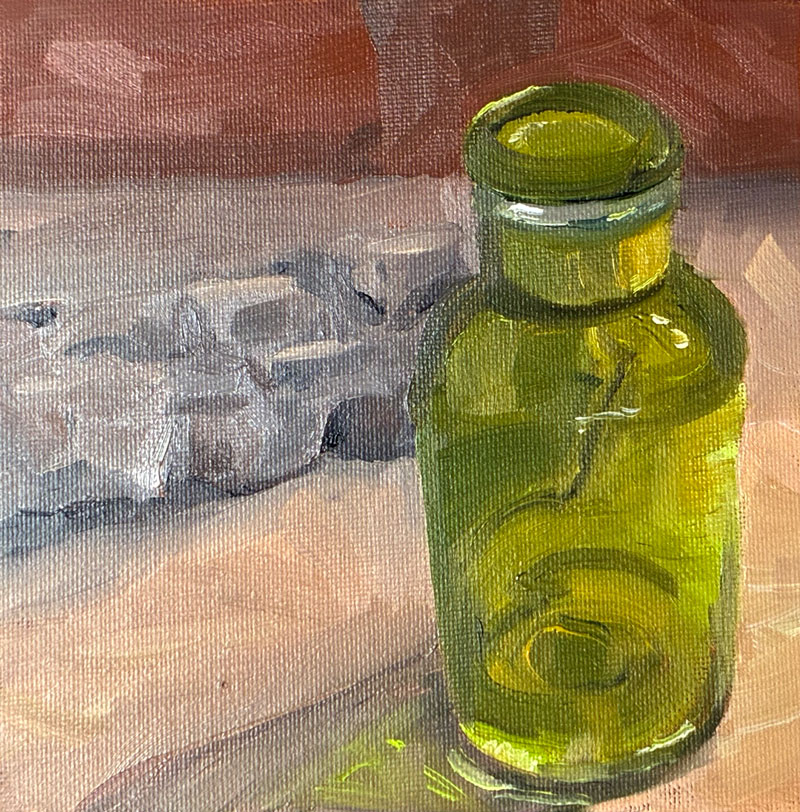
As happens, life got in the way and I’ve let my blog slip for a bit as I dealt with some annoying and painful events that I’m now on the other side of. In my commitment to document every one of my paintings, though, I’m going to drift back in time to when I thought I was pretty hot stuff for creating my first work in color (extremely dark and under-saturated color, but color nonetheless). Now it’s — let’s say — a few days later.

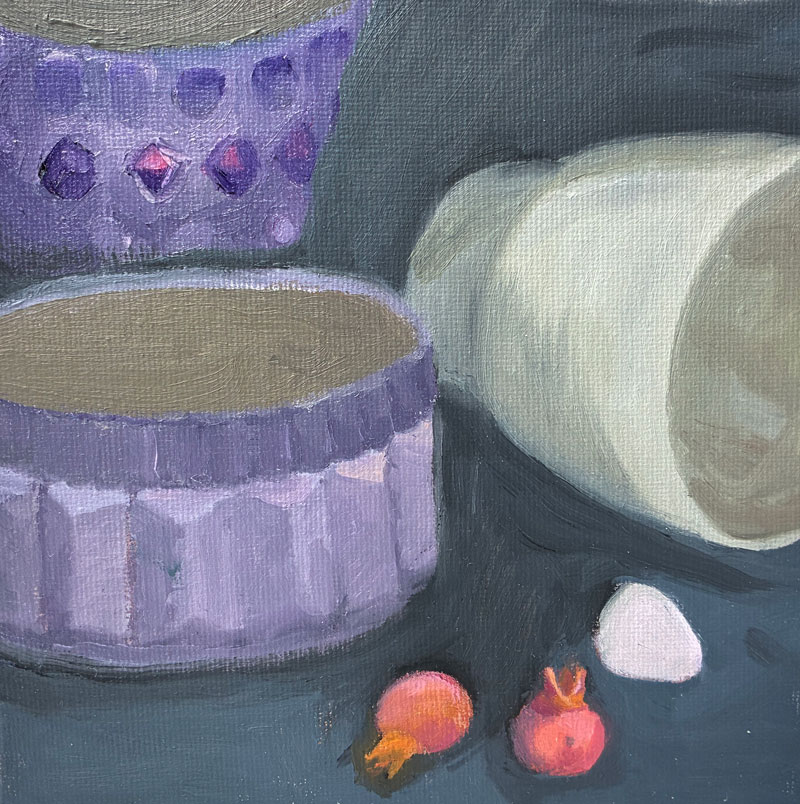
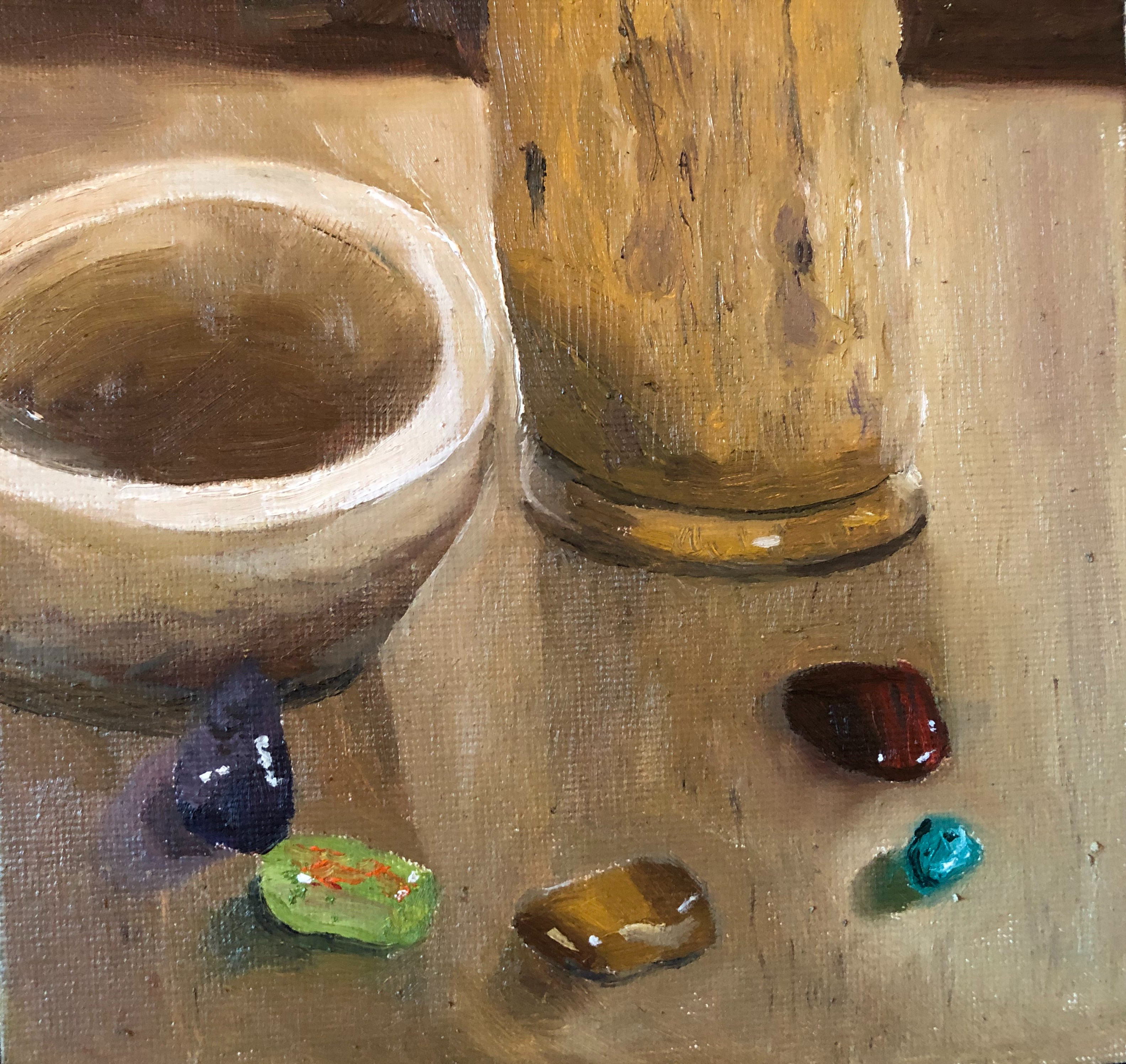
Let me preface this next image by letting you know that I’m a little embarrassed by it. It’s no Dopey and the Oven Mitt. But hopefully someday when I’m famous(!), some insecure beginner like myself will see it and say, “What?! Jennifer Caritas started like this?!”

Yeesh. I think I hate it even more in digital form.

Okay, first off — what the heck is going on with that little bowl on the left? It appears to be doing some Dali-esque melting. And all of my little stones seem caught in their own little tornados. Maybe this is actually a masterwork of surrealism!

I’d probably forgive myself the odd perspectives and brushwork missteps, though, if I were happy with the style. What I’ve done here, though, is an unsuccessful mashup of realistic and expressive, which reads as unrealistic, and very messy. Hyper-realistic painting is not a style I care for anyway, but I’m realizing that once I start adding all the small-brush details (like the grain on the vase and the table), I’ve upped the ante for how perfect all the other aspects of the painting need to be. No little halos or tornados allowed! Now I have to figure out how I can suggest grain (and other details) without resorting to all the little ticky-tacky lines I’ve used here.

So much to learn!

What I did well:
I like the two stones on the right.
The composition was somewhat thought-out.

What I could’ve done better:
Too much to list! Odd distortion on bowl, too many little lines to suggest grain, light from several sources…

Why do we paint like we do?

In the few weeks I’ve been painting, I’ve realized how little I know about even its most basic tenets. I didn’t know — and now do — how to tone a canvas, how to clean and preserve my brushes, even how to hold a paintbrush. Now I was learning what I thought I knew as a four-year-old: how to put down paint.

After completing our drawings of Dopey and the Oven Mitt, it was time to fill them in. Prior to my rogue gun-jumping first painting, I would’ve thought that this process was easy-peasy — just like Paint by Numbers, right? Not, apparently, so fast.

As I’m learning, one of the keys to painting accurately is separating what you see from what you think you know. You think you know that the ocean is blue; if you don’t consciously work to erase that preconception, you’ll ignore the evidence before you and choose colors much less varied and interesting than what nature has presented. Likewise, you think your fingers are long and tapered, but from many angles they’re foreshortened and squat: Paint them as you think they are, and you’ll look like a cartoon.

It’s difficult work, erasing these preconceived notions. To do it, we need to rely on tricks that divorce our lines — which have no particular meaning — from the objects we’re painting, which are filled with it.

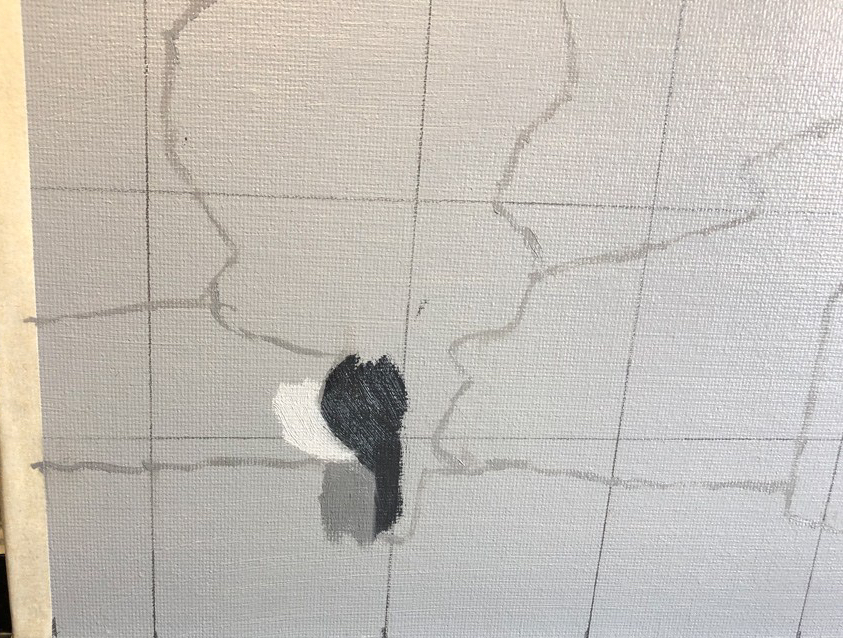
This process starts with our very first strokes. Rather than simply filling in our shape with paint, like we’ve all been taught to do throughout our lives, we instead paint in patches, silver-dollar-sized regions that might contain two or more different areas of color or value.

IMG_3027

According to Jim, ideally you’d start with your darkest value, then medium, then light.

As I mentioned in my last post, we’re using the “fat over lean” process of painting — creating our paintings by laying down thin layers of paint that we then let dry before continuing to add to and revise. In order to keep the ability to revise the edges in future iterations, and to minimize the possibility that our surface will crack, we want to avoid the ridges that might come from having excess paint on our brushes when we come up to an edge. To do this we first touch down our brush well away from an edge and then paint toward it. Only when the paint has significantly thinned do we then paint along the edge.

Another way to make sure we’re not getting bamboozled by the “object-ness” of what we’re painting is to use a large hand mirror placed against our foreheads and reflecting on our painting and the subject we’re painting from, causing us to see them upside-down and backwards. This helps to break the connection between the shapes and lines that we’ve painted and the object that they represent, so that we can better see flaws in our angles, proportions, and values without the brain jumping in and trying to make our item look more vase-like, or hand-like, or in our case, oven-mitt-like.

So how did this all translate to Dopey and the Oven Mitt?

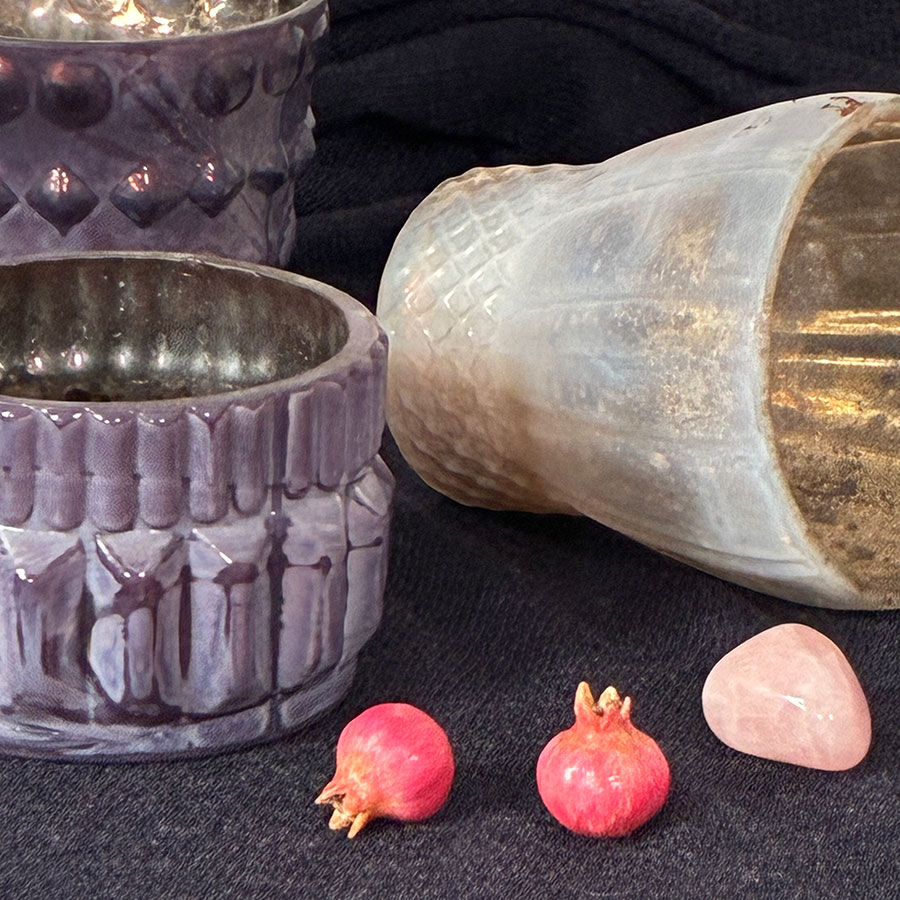
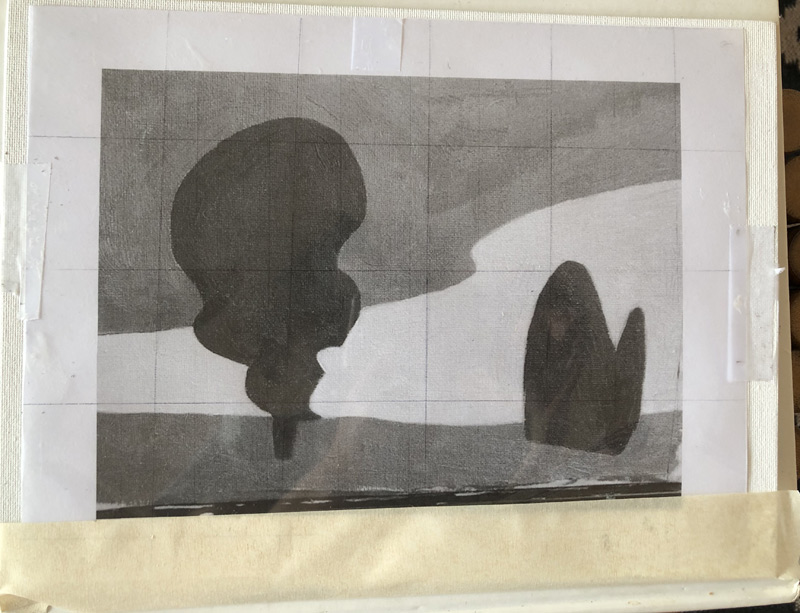
Remember, here was what I was painting:

withgrid

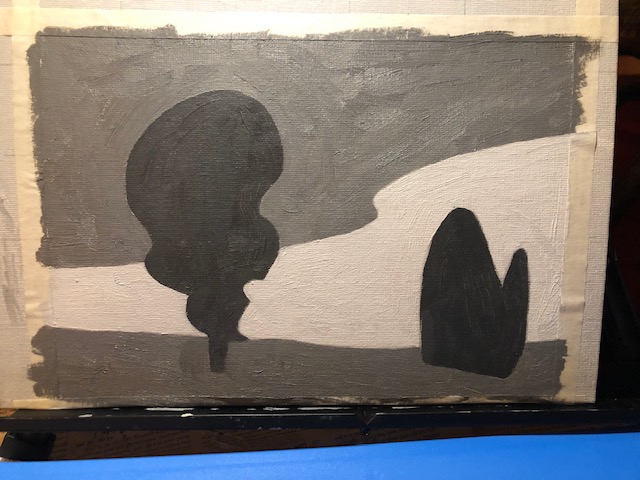
And here’s the final product:

IMG_0699

Wait — is that a perfect copy? Is she really that good?

No! Psych — they’re the same! I didn’t have access to the original, so I just showed my finished painting instead.

But now, here’s the original:

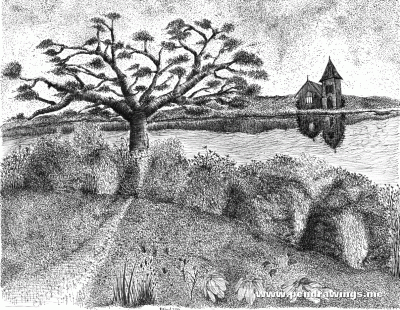
church_by_river_wm

Still pretty close, right?

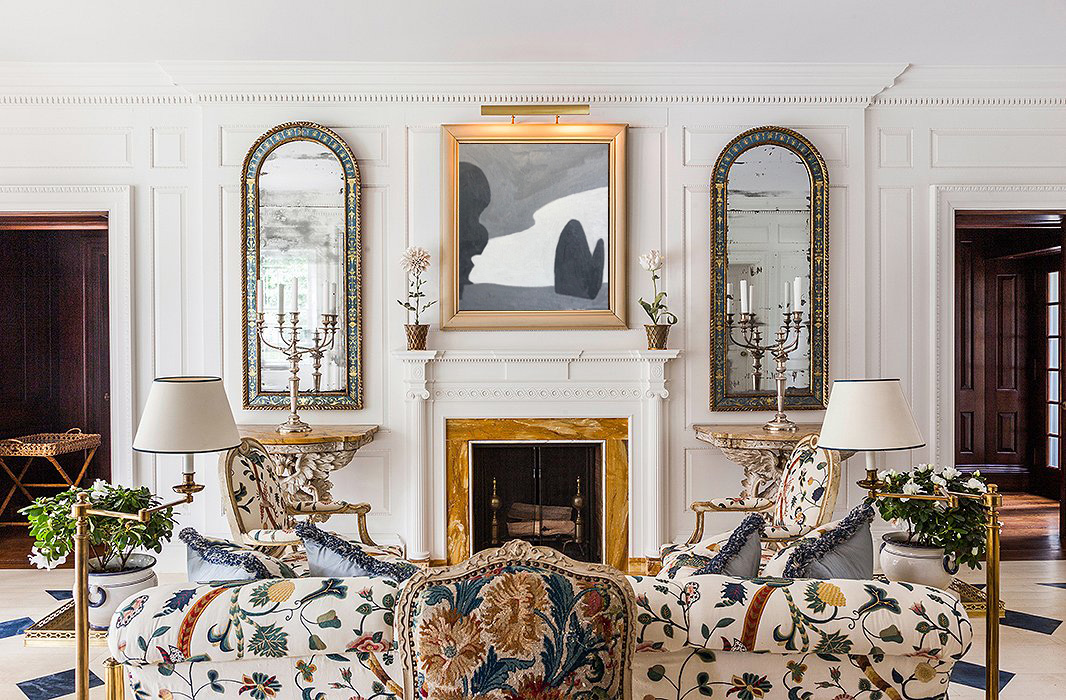
083116_AboveTheFireplace_9
Lookin’ good!

From short to joyful – preparing my palette

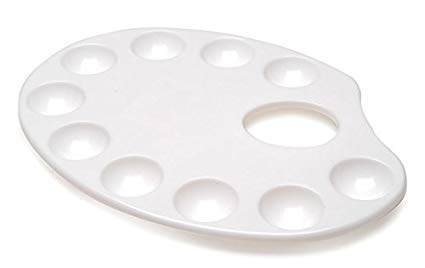
Used to be, whenever I’d think of an artist, busy in her studio, I’d pictured her as follows. She’d have brushes, probably several. She’d stand at an easel. She’d be wearing a beret (just kidding). And she’d have one of those white plastic palettes with all the little wells to keep her paints nice and clean.

Wait — no?

palette

As I learned in my second class  – no. Though it varies by brand, most oil paint starts out “short,” a nasty word (He was short with me because I came up short in painting) when what we want is for it to be “joyful.” For this, we need medium.

Painting Medium

2 parts Walnut Alkyd Medium
2 parts Gamsol (Gamsol is an Odorless Mineral Solvent — basically turpentine without the stink and braincell killers)

Mix!

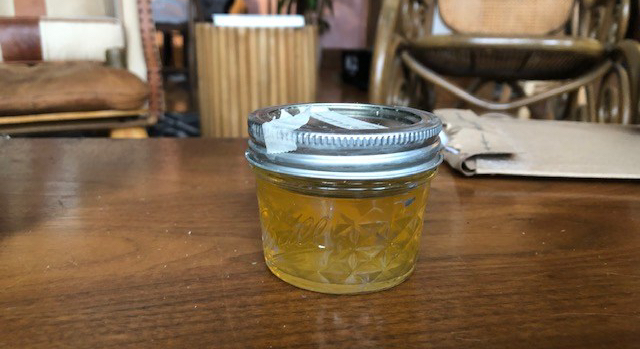
It should look like this:

Painting Medium
No, I’m not taking a drug test — that’s my painting medium!

All oil paint has oil in it (it’s true!) — typically linseed oil, from the seed of the Lin (actually, I have no idea what kind of oil linseed is). Gamblin paints, though, don’t have very much, making them stiff (or short) to use straight from the tube. In order to make them flow, and have the glossy, buttery, luscious consistency we’re looking for (what Jim calls “joyful”), we need to add some extra oil and solvent: our medium.

Note: You could use linseed oil instead of walnut oil in your medium — it actually dries faster than walnut oil (a lovely thing when you have to cart paintings back and forth to class) — but it will become more yellow than walnut over time. (And by time I mean — say it with me — 200 years…).

According to Jim, many artists have learned to do what I used to do — dip the brush first into medium, and then into paint (though I seem to recall instead dipping straight into — horrors! — turpentine). The problem with this method is that any yellowing you’ll see over time will be inconsistent, because some of your brushstrokes will have more oil than others. That’s a lot harder to compensate for with lighting. Instead, you’ll need to mash your medium directly into your paint, and for that, those cute little wells just ain’t going to cut it.

In class we use tempered glass as our palette, with a backing of little swatches of all of our greys to remind us what to put where. That’s awesome while I’m there, but being a little, um, short on cash I just hate wasting all of that unused paint, only to have to remix it all again the next time I sit down. Instead, I just bought this Masterson Artist Palette Seal, which will allow me to close up my box of paints until the next session. Handy dandy! You use it with palette paper, so when you’re done with a project you just scoop up the paper and trash it. Nice!

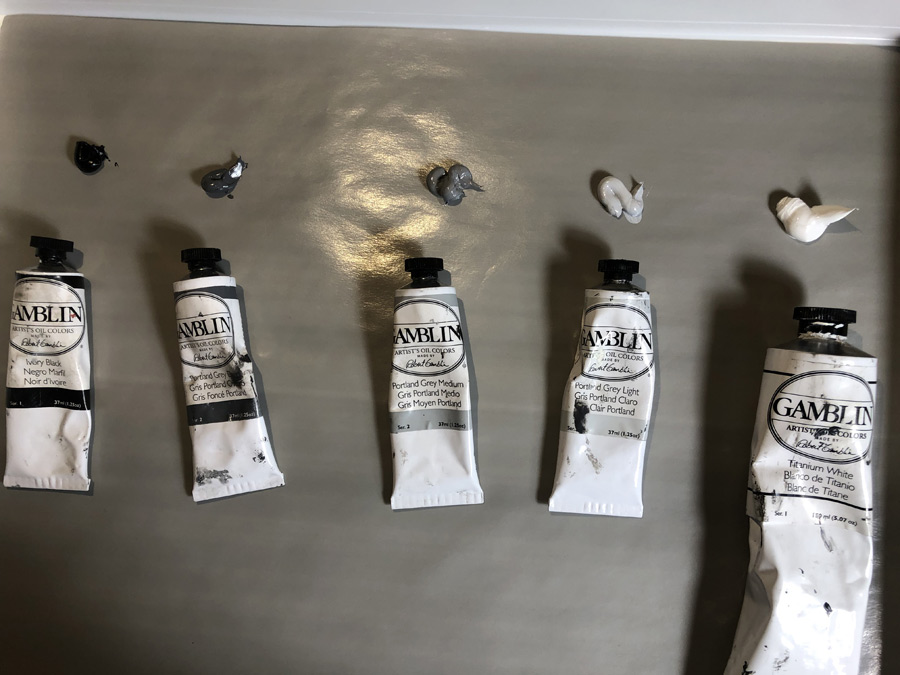
If you’re following this method, and painting without color, you’ll have five paints: Titanium White, Portland Light Grey, Portland Medium Grey, Portland Dark Grey, and Ivory (?) Black.

When you’re ready to paint, squeeze out an inch or so of each in a row from black to white, with a space in the middle of Portland Medium and Portland Dark to create a blend of the two.

paints
Note: Normally for a project you’d use A LOT more paint then this. It’s a real bummer to run out of a mixture you’ve created and have to try to match it. I’m just cheap and didn’t want to waste it for a demo.

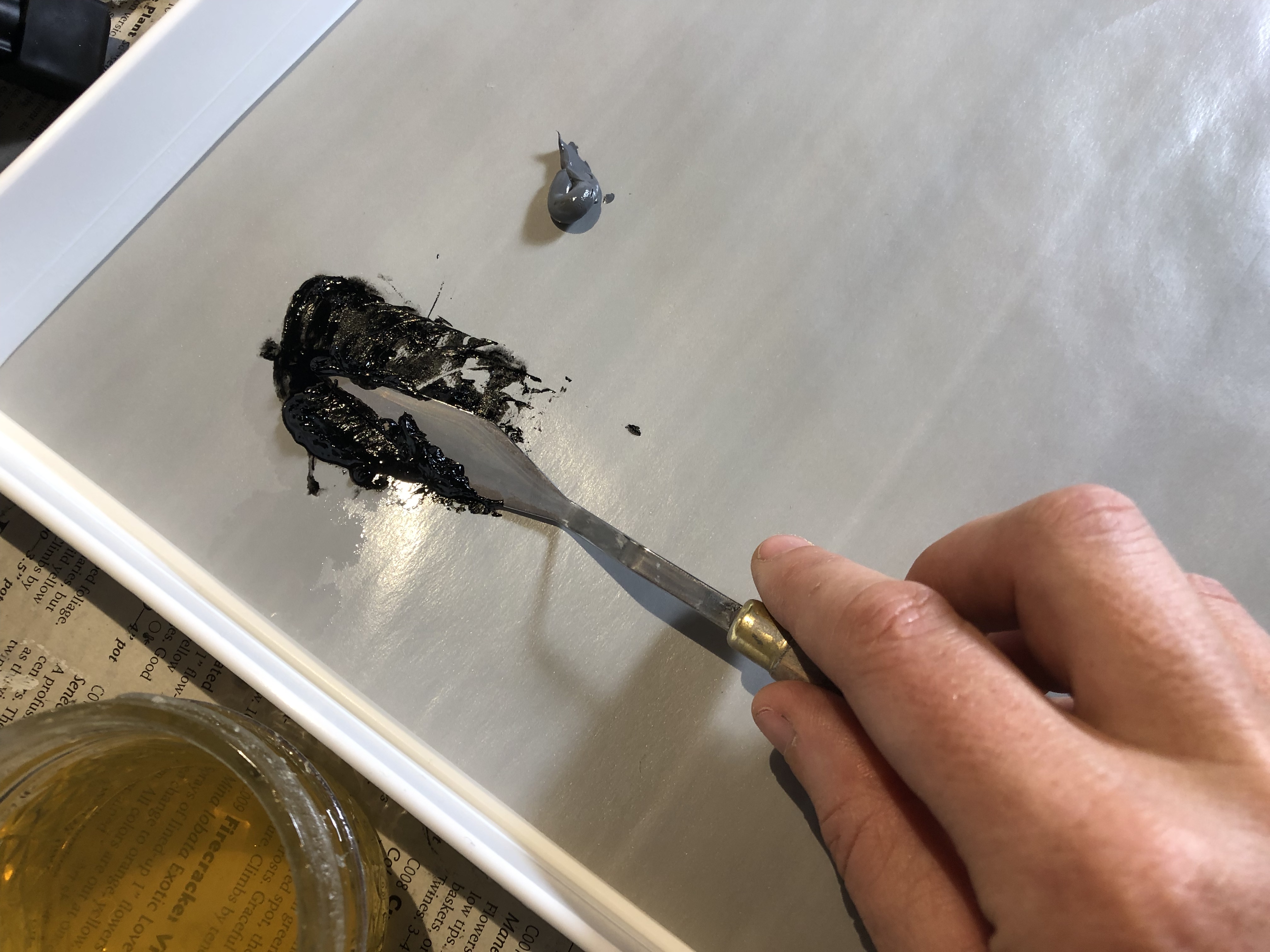
Dip the back of your brush into your painting medium, and drip about 4 drops onto each blob of paint (the amount of paint in my photo would probably just take a drop per pile!). Taking your palette knife, cut them in and continue to mash up each pile of paint, scraping up regularly to keep your piles small and neat (I’m not there yet with this skill.). You’ll probably find you need more medium — it should be around the consistency of shaving cream (if shaving cream feels joyful. Maybe you get more joy from… sour cream? Me, I like shaving my legs.)

mashingpaint

You’re ready to paint!

In my next post, I’ll talk about holding the brush. Who knew this was something I could do wrong?