From short to joyful – preparing my palette

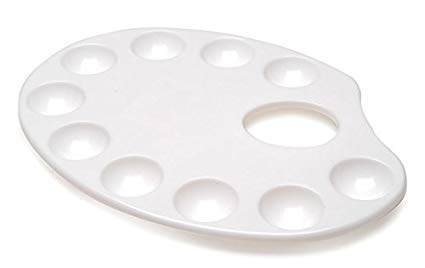
Used to be, whenever I’d think of an artist, busy in her studio, I’d pictured her as follows. She’d have brushes, probably several. She’d stand at an easel. She’d be wearing a beret (just kidding). And she’d have one of those white plastic palettes with all the little wells to keep her paints nice and clean.

Wait — no?

palette

As I learned in my second class  – no. Though it varies by brand, most oil paint starts out “short,” a nasty word (He was short with me because I came up short in painting) when what we want is for it to be “joyful.” For this, we need medium.

Painting Medium

2 parts Walnut Alkyd Medium
2 parts Gamsol (Gamsol is an Odorless Mineral Solvent — basically turpentine without the stink and braincell killers)

Mix!

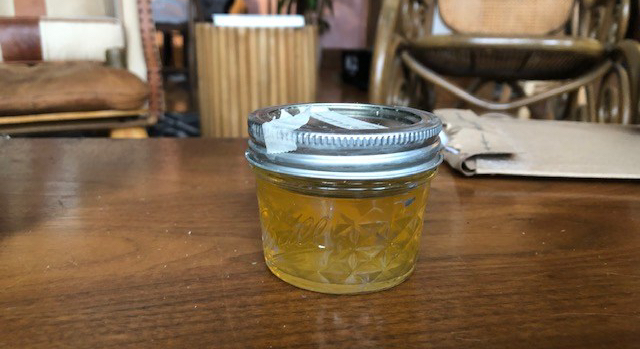
It should look like this:

Painting Medium
No, I’m not taking a drug test — that’s my painting medium!

All oil paint has oil in it (it’s true!) — typically linseed oil, from the seed of the Lin (actually, I have no idea what kind of oil linseed is). Gamblin paints, though, don’t have very much, making them stiff (or short) to use straight from the tube. In order to make them flow, and have the glossy, buttery, luscious consistency we’re looking for (what Jim calls “joyful”), we need to add some extra oil and solvent: our medium.

Note: You could use linseed oil instead of walnut oil in your medium — it actually dries faster than walnut oil (a lovely thing when you have to cart paintings back and forth to class) — but it will become more yellow than walnut over time. (And by time I mean — say it with me — 200 years…).

According to Jim, many artists have learned to do what I used to do — dip the brush first into medium, and then into paint (though I seem to recall instead dipping straight into — horrors! — turpentine). The problem with this method is that any yellowing you’ll see over time will be inconsistent, because some of your brushstrokes will have more oil than others. That’s a lot harder to compensate for with lighting. Instead, you’ll need to mash your medium directly into your paint, and for that, those cute little wells just ain’t going to cut it.

In class we use tempered glass as our palette, with a backing of little swatches of all of our greys to remind us what to put where. That’s awesome while I’m there, but being a little, um, short on cash I just hate wasting all of that unused paint, only to have to remix it all again the next time I sit down. Instead, I just bought this Masterson Artist Palette Seal, which will allow me to close up my box of paints until the next session. Handy dandy! You use it with palette paper, so when you’re done with a project you just scoop up the paper and trash it. Nice!

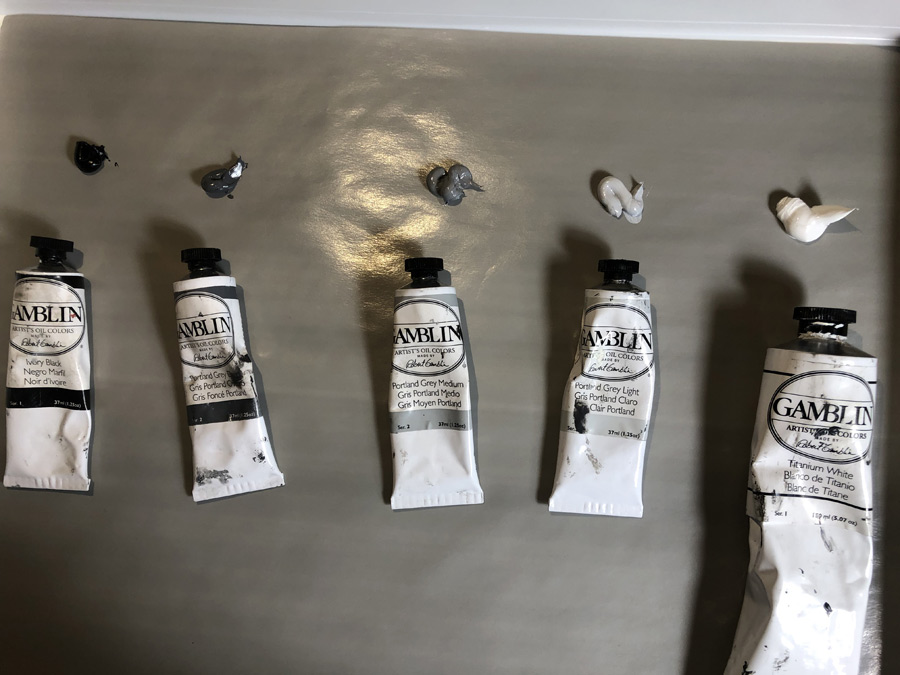
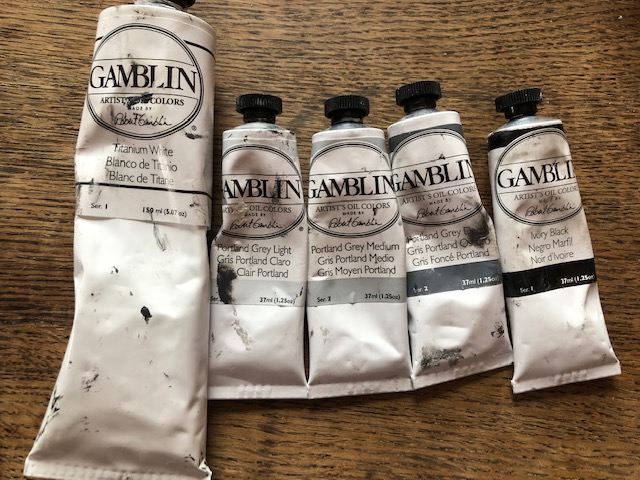
If you’re following this method, and painting without color, you’ll have five paints: Titanium White, Portland Light Grey, Portland Medium Grey, Portland Dark Grey, and Ivory (?) Black.

When you’re ready to paint, squeeze out an inch or so of each in a row from black to white, with a space in the middle of Portland Medium and Portland Dark to create a blend of the two.

paints
Note: Normally for a project you’d use A LOT more paint then this. It’s a real bummer to run out of a mixture you’ve created and have to try to match it. I’m just cheap and didn’t want to waste it for a demo.

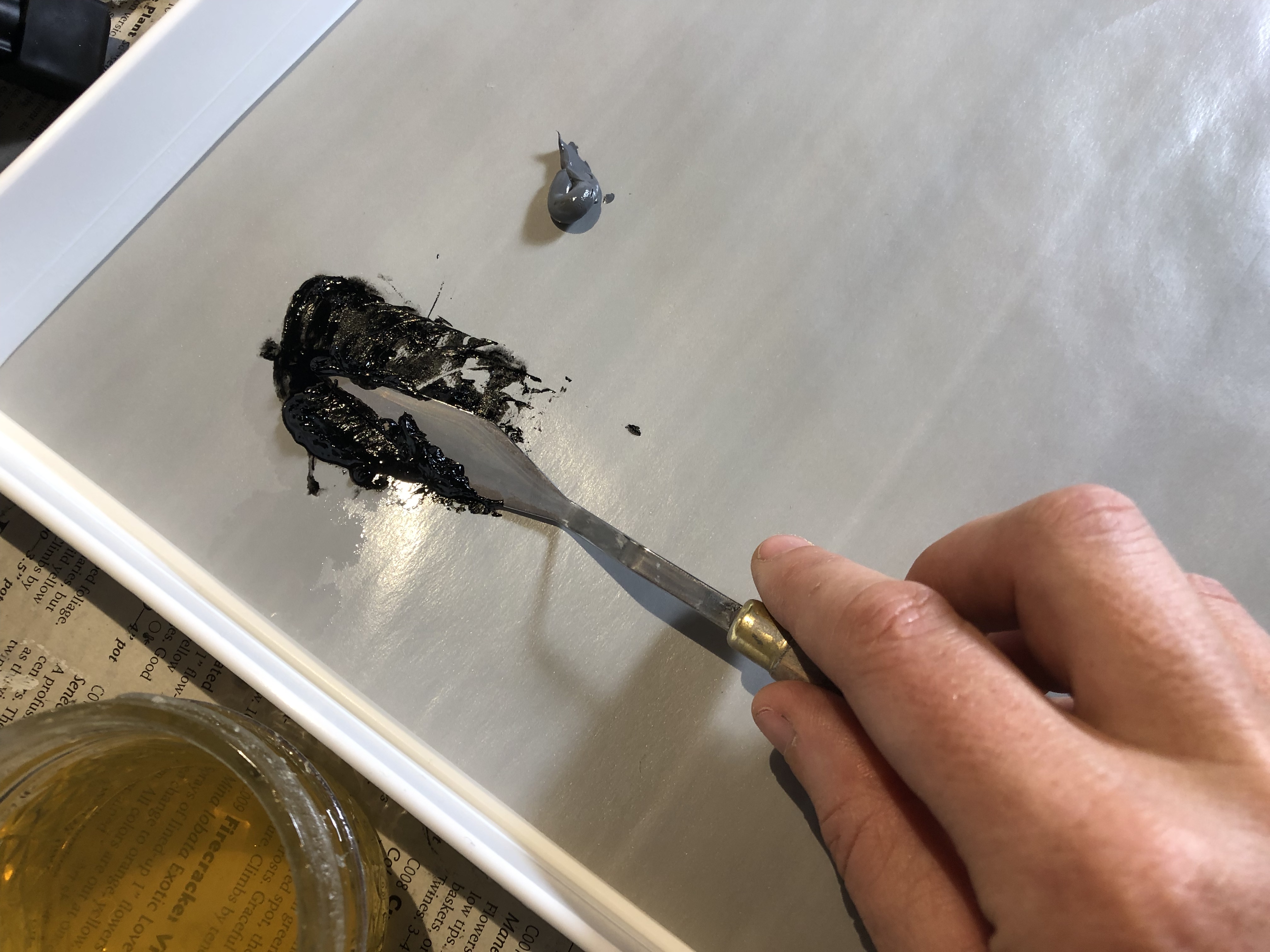
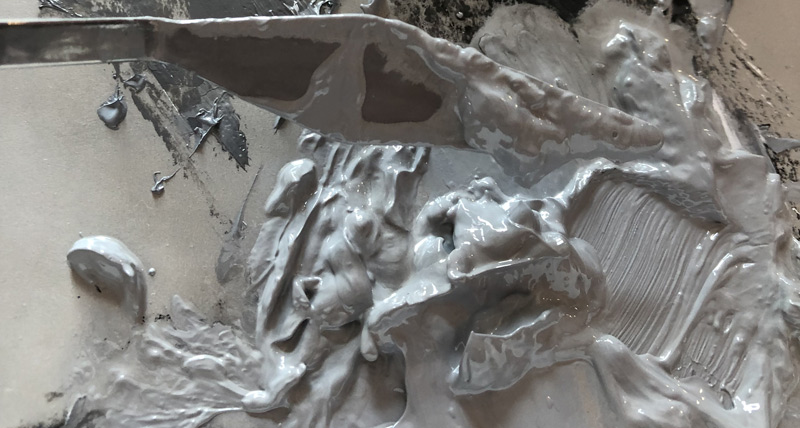
Dip the back of your brush into your painting medium, and drip about 4 drops onto each blob of paint (the amount of paint in my photo would probably just take a drop per pile!). Taking your palette knife, cut them in and continue to mash up each pile of paint, scraping up regularly to keep your piles small and neat (I’m not there yet with this skill.). You’ll probably find you need more medium — it should be around the consistency of shaving cream (if shaving cream feels joyful. Maybe you get more joy from… sour cream? Me, I like shaving my legs.)

mashingpaint

You’re ready to paint!

In my next post, I’ll talk about holding the brush. Who knew this was something I could do wrong?

What would my great-great-great-great-great-great grandchild think? Priming and toning a canvas

Back in the days when I had my little studio set up in my apartment in Maine, if I wanted to paint with oils I’d buy a pre-primed canvas board from the art store, sit down to that bright white canvas, dip my brush first into a jar of turpentine and then into my paint and have at it. Surprise, surprise: I didn’t know what I was doing.

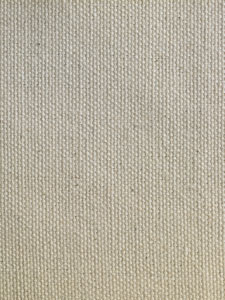
unprimed_cotton
Unprimed cotton canvas from Dick Blick. I suck (literally)!

That bright white canvas I was using had been primed but it hadn’t been toned. Raw, unprimed cotton or linen canvas is nubbly and absorbent; priming involves first applying size (a sealant made from animal glue that protects the canvas from the acids in the paint) and then ground (usually gesso), which gives the canvas a smooth, uniform texture and color and prevents your paints from getting sucked right into the canvas.  If you’re buying raw canvas, however,  you need to stretch it before you prime it, and for that you need stretchers and canvas pliers and yada yada yada that’s a whole other ball of wax I don’t know a thing about. Lot’s of other people do, though. Here’s one.

Why would you go through all that hassle? To save money, primarily; to use a canvas shape you can’t find pre-made; to have complete control of the surface of your painting. I get it, but I’m not there yet.

Instead, as absolute beginners, we’re using these Tara Fredrix acrylic-primed canvas panels. According to Jim, though, that’s only because these early experiments are likely just bound for the circular file. As we improve, we’ll want to avoid acrylic-primed canvas, especially – ESPECIALLY – acrylic-primed stretched canvas, which is complete garbage, and in two-hundred years will make our paintings such a mess of crazing that our conservators will tear their hair out trying to fix them up.

Ahem. Yes.

Exchange when Jim left the room:
Classmate M: Do any of you have a panel I can borrow? Wet Paint was out of them and they sold me acrylic-primed stretched canvas!
Classmate B, handing one to her: Yes, no need to fall on that particular sword…

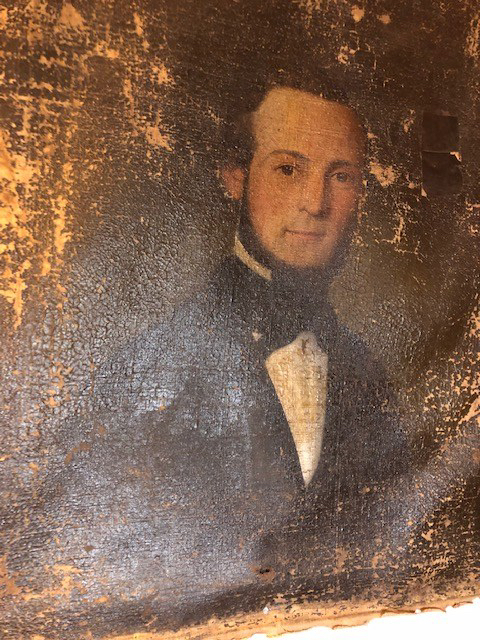
auction pic
A 200-year-old painting I bought at an auction. Acrylic-primed?

Instead, our best option as we advance will be oil-primed linen canvas, although looking at the prices I don’t expect to be using this for “Still Life with Grey Pear #2”!

So that’s Priming… What about Toning?

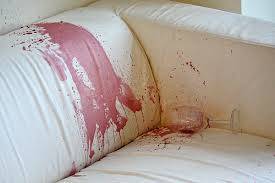
red wine spill download
No one would even notice this on light grey!

Here’s a rule: Unless — and perhaps even if — we’re painting a Bichon Frise lost in a snowstorm, we never want to paint on a blank white canvas. There are two reasons: First, oil paint grows more transparent over time, and (here’s that 200 years thing again) we don’t want our descendants to see our paintings any brighter than we originally intended. For those of us less concerned with our legacies, though, painting on white is really just harder on the eyes: It’s much more difficult to judge value and color against white. Darks will appear darker, colors brighter (think of how that red wine stain pops against your new white couch) and we’ll end up compensating with our paint choices, leading to unintended results. Plus, if our paint is too thin in some areas we might see little white speckles poking through — blech.

Instead, we tone our canvas by laying down a thin, semi-translucent layer of paint mixed with toning medium.

Toning Medium

1 part Walnut Alkyd Medium (WAM is walnut oil to make your paint less stiff – I’ll get into this more in an upcoming post on creating your palette — mixed with alkyd for a faster dry time)
3 parts Gamsol (Gamsol is an Odorless Mineral Solvent — basically turpentine without the stink and braincell killers)

Mix!

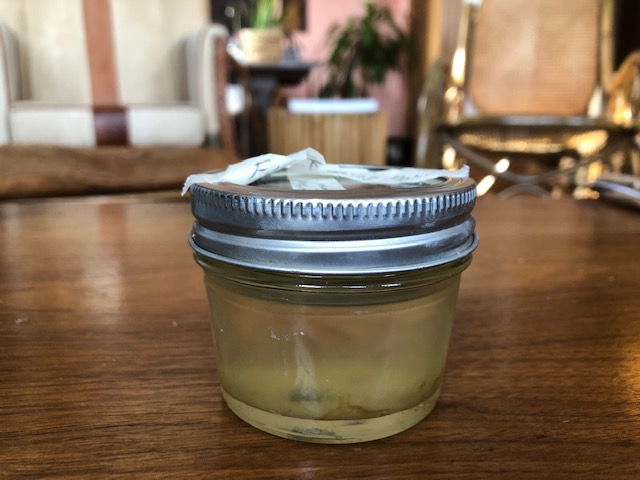
It should look something like this:

WAM

…but less grody. Mine appears to be growing something.

Mark the level on your jar. The Gamsol will evaporate much more quickly than the WAM, and if you haven’t used very much you’ll be able to fill it to the line again with Gamsol.

Now we need to mix it with our paint. Which paint? For us, at this point, we’re using…grey. (Later, I’ve heard that it’s your painting’s dominant color, but I’ll get into that when I learn color.)

As you see on our materials list, we’re using Gamblin paints, mostly the Portland Greys (I used to live in Portland, and I can vouch for it being this color most of the year) with some white and black.

paints
The black is called Ivory Black. How weird is that?

Our goal is to create a mixture that’s around 60-80% light. If I’d like to be systematic, I’d use some Portland Grey Medium, Portland Grey Light, and Titanium White, all mixed together to a lovely pearly shade of kitten whiskers.

But in the few weeks I’ve been painting, I’ve already gotten lazy about this and just tend to mix all my leftover greys together after a painting session and brighten the whole mess up with white if necessary. As far as I can tell, it’s not an exact science.

Once your paint is mixed up, you can add the toning medium. This can be scooped up with your palette knife and dumped into your paint pile one or more times; then you continue to mash it all up and scrape it around until you get to the consistency of thick soup. Yum!

drippy
Drippy, but could be even drippier…

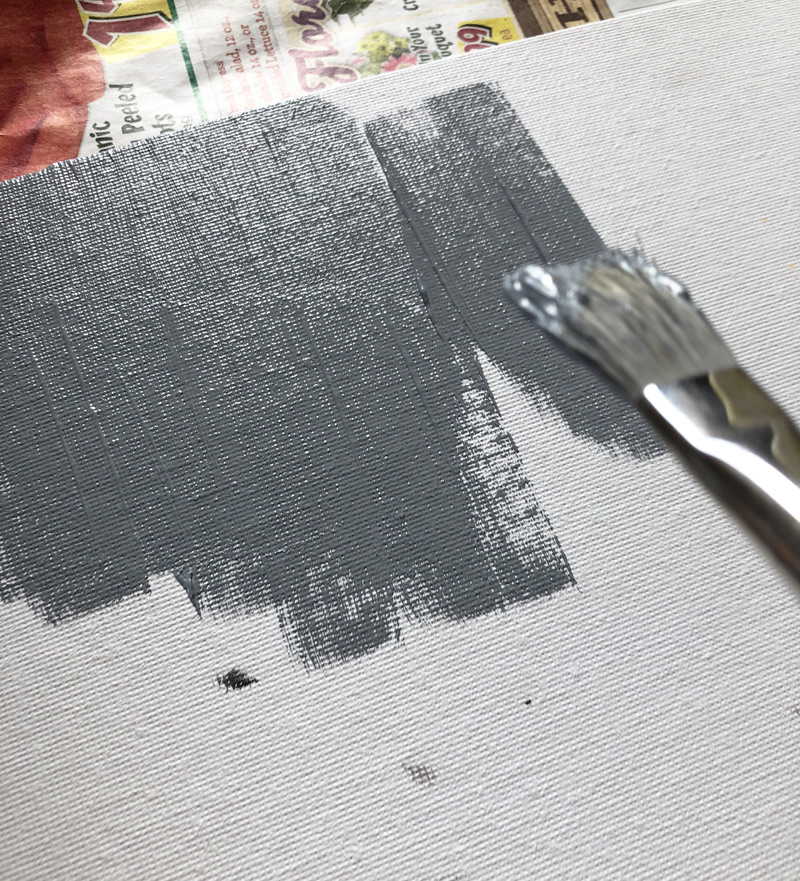
Lay your canvas out on newspaper — this is a mess and no job for an easel — and using the largest, widest of your brushes, paint it on.

paintingon
My photography is shite! This is actually a fairly light grey.

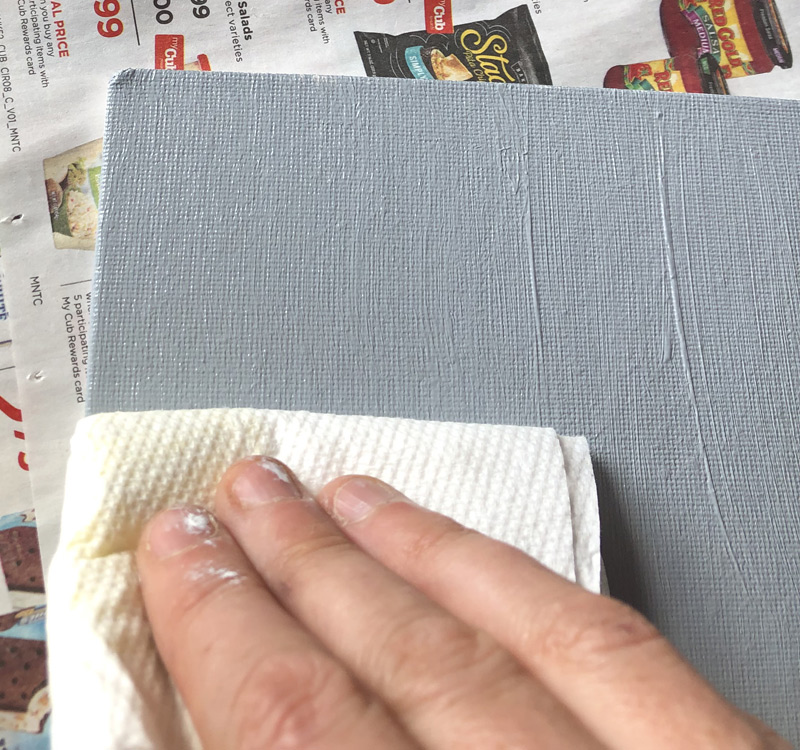
Then, fold up a paper towel or shop towel and lightly scrape it across the canvas, removing the excess. You’re done!

withpapertowels

Now, waaaaaiiiiiittttt….. It takes at least three days, if not longer, for your toned canvas to be ready to paint on. Go watch TV!

But first, you have a messy brush. Read on to find out how to clean it. (Spoiler alert: it involves spit!)

How much is that squirrel in the window?

After sending in the check for my class in late November, I didn’t hear anything back from the school until last month, a week before the class was set to begin. In a hand-written envelope, I received — absent of anything else — a materials list whose items were partially obscured by fading printer ink. My check had yet to be cashed.

 The Art Academy, Inc.

    Adult Oil Study Techniques Class
    Materials and Supply List

The art supplies listed below can be purchased as a kit at the art supply store Wet Paint, 1684 Grand Ave., St. Paul, at a discounted rate. Please purchase Gamblin oil paints.
Do not buy student grade paints.   This oil painting kit is an investment and will last for many years.

Required Paint

• Titanium White, 150 ml tube
• Portland Grey Light
• Portland Grey Medium
• Portland Grey Deep
• Ivory Black
• 3 Sets of 3 – 9”x12” canvas boards (for a total of 9 boards)
 
Brushes, Mediums, etc.
(If you have purchased oil painting supplies for our Traditional Drawing and Painting or Renaissance Drawing and Painting Techniques and Beyond classes you should already have these brushes and mediums)

• Silver Bristion round #0 (or equivalent)
• Signet round bristle brushes, #0, 2, 4, 6 (or equivalent)
• Signet filbert brushes, #1, 2, 4, 6 (or equivalent)
• Signet flat brushes, # 2, 4, 6 (or equivalent)
• Richeson watercolor brush, #1 (or equivalent)
• Richeson watercolor brush, #0 (or equivalent)
• M. Graham Walnut Alkyd Medium, 4 oz.
“The Masters” Brush Cleaner #101
• Richeson 36×36 cm brush mat or any other brush holder
• Richeson #894 palette knife
• 1 pint Gamsol
 
Household Items

• Shoebox or Tackle box to hold art supplies
• Roll of Paper Towels (to be left at classroom). Bring a new roll every session.
• 3 small jars with tight fitting lids

This seemed like a lot of materials to me, and I mentally calculated how much Aunt-money I’d have left once the school got around to cashing my check. I had no idea how much art supplies might cost, but I didn’t like the sound of “investment.” I did like the sound of “discounted rate” however, and Wet Paint is right down the street from me, so I decided to do the moral thing and purchase my new supplies locally rather than buying them online. Take that, Amazon!

wetpaint
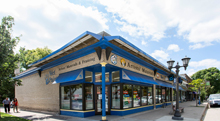
Wet Paint, on Grand Ave., Saint Paul

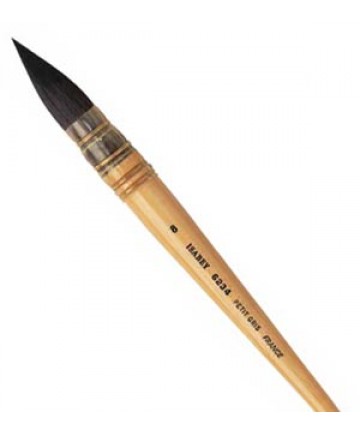
Art stores are exciting places, but at age 48 I still can’t help caring that I’m never going to look hip enough to seem like I belong in one. I took my 11-year-old daughter, Olive, with me for support, and we were approached almost immediately by a guy who very clearly did belong there, offering to gather up our inventory. This struck me as a good idea, because it would’ve taken hours for clueless us, and because it gave me the chance to look around at the sea of wonders I was anxious to dip my toes into. Glue made from rabbits! Four-hundred-dollar brushes made from sable! One-hundred-dollar brushes made from squirrels (Siberian blue ones at that)! I didn’t care to think of the adorable little mammals who sacrificed their outer coverings for the sake of someone’s ideal brushstroke, but there’s something very beautiful about the tradition that must be involved in creating something so unique and perfect, so opposite of mass-produced. I can imagine the fourth-generation artisan, um, gently shaving the squirrels to gather those fifty perfect hairs, which will then be used to create someone’s perfect painting, to be hung in someone’s perfect building. So much beauty.

squirrel-brush
A squirrel-hair brush from Wet Paint. So cute!!

My new brushes, however, were made of good old-fashioned synthetics, and wouldn’t be creating much beauty, at least for awhile. I met the Art Dude up at the counter, and realized quickly, as I watched the computer screen flashing its totals, that –for better or worse — the expediency with which this task was getting done came at the price of doing what I always do: picking out the cheapest option. Instead, my heart did a little flip-de-doo as he read me my total: two-hundred and sixteen dollars. Gulp.

It was only when I got home that I realized what my new kit didn’t contain: color. Apparently, painting like the old masters meant going back to the time when the world was still in black and white!

bw-renaissance
Back before God invented color